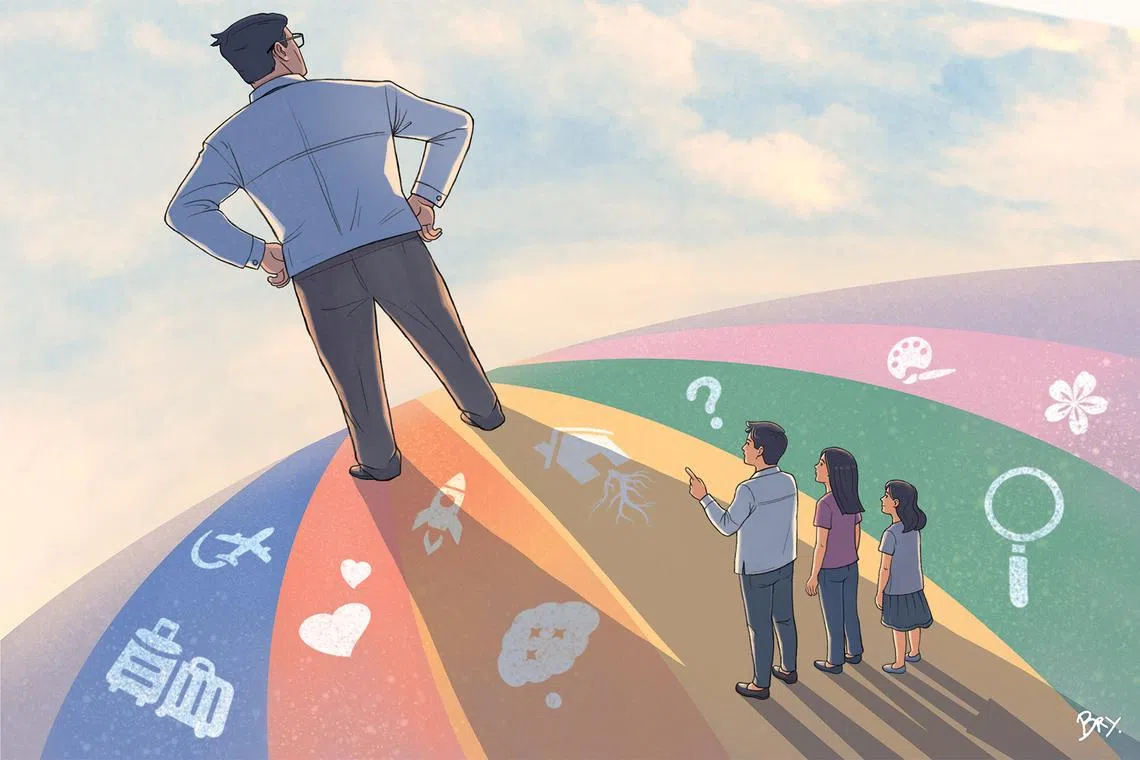
In a world characterized by rapid changes and increasing challenges, the role of parents emerges as a fundamental element in raising children. In his book 'The Parents' Council', author Bruce Feiler reveals the importance of forming a group of parents to support their children, particularly in cases where one parent is absent. The book discusses how such councils can contribute to providing emotional support and guidance to children, enhancing their ability to face life's challenges.
Feiler draws on his personal experience, having faced health challenges that made him contemplate how to secure his children's future in his absence. By forming a council of parents, he ensured that his children would have a strong support network of men who could offer necessary advice and guidance. This idea is not new, but it gains greater significance in light of the complex social conditions we live in today.
Event Details
The book showcases a collection of stories and life experiences that Feiler and his friends have gone through, reflecting how a group of parents can provide strong support for one another. It also discusses how to select suitable members for the council, how to organize meetings, and how to exchange ideas and experiences. This approach highlights the importance of cooperation and communication among parents, contributing to building a healthy environment for children.
Moreover, the book emphasizes the core values that parents should embody, such as honesty, respect, and dedication. These values are not only crucial for raising children but are also essential for building a strong and cohesive community. By sharing experiences, parents can learn from one another and enhance their parenting skills.
Background & Context
Raising children is one of the most challenging tasks in a person's life, especially in the face of changing social and economic conditions. In many communities, parents face challenges such as work pressures, family changes, and a lack of social support. In this context, the idea of forming a parents' council emerges as an innovative solution to address these challenges.
Historically, communities relied on extended families to raise children, where grandparents, uncles, and aunts played significant roles in this context. With changing lifestyles, it has become necessary to rethink how parents can support each other. The idea of a parents' council revives this tradition in a modern way, reflecting the importance of social ties in child-rearing.
Impact & Consequences
The impact of forming parents' councils can be profound at both individual and community levels. By providing emotional support and guidance, these councils can contribute to improving children's mental and emotional health. Additionally, having a network of parents can reduce feelings of loneliness and isolation that many parents may experience.
Furthermore, these councils can help promote positive values in the community, such as cooperation, solidarity, and sharing. By working together, parents can contribute to building a more cohesive and stronger community, benefiting children and society as a whole.
Regional Significance
In the Arab region, where social and economic challenges abound, the idea of forming parents' councils can be an innovative solution. Many families suffer from economic and social pressures, making strong community support essential. Parents' councils can enhance social ties and help build a more cohesive community.
These councils can also play an important role in promoting cultural values and Arab traditions by providing a platform for exchanging experiences and knowledge. Amid the rapid changes in Arab societies, these councils can serve as a means to preserve cultural identity and strengthen family ties.
In conclusion, Bruce Feiler's book 'The Parents' Council' offers a new perspective on the role of parents in raising children. By forming parents' councils, we can rebuild social ties and promote positive values in the community. This idea is not just a solution to current challenges but also a step towards building a better future for generations to come.