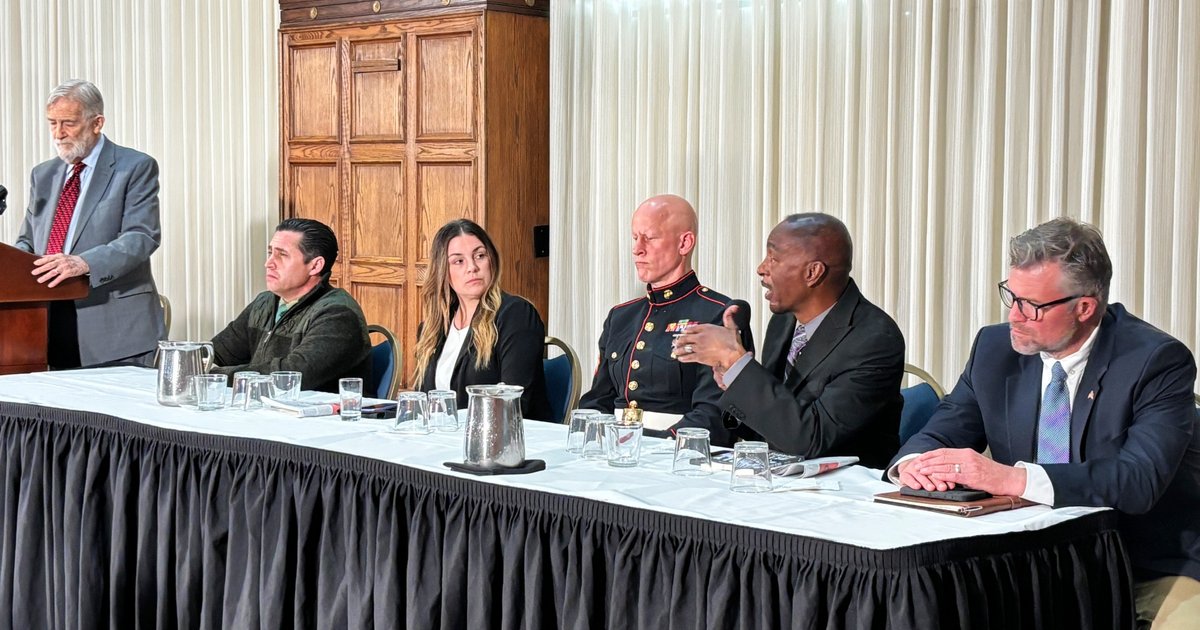
In a controversial event, a group of former American soldiers expressed their concerns that Israeli policy has begun to direct American interests, threatening the lives of American soldiers in the current war against Iran. Since the war began on February 28, 13 American soldiers have been reported killed, but the former soldiers insisted that the actual numbers could be higher, as American military hospitals in Germany are full.
Former President Donald Trump has repeatedly suggested that there may be more casualties, considering it part of the costs of war. After facing sharp criticism for wearing his campaign hat while receiving the bodies of returning soldiers, the US administration decided that the next body transfer ceremonies would be closed to the press.
Details of the Event
During a discussion at the National Press Club in Washington, the former soldiers criticized Washington's policy in initiating the war, pointing out that Israeli operations have become an integral part of decision-making at the US Department of Defense. One example cited was the attack on an elementary school in Minab, Iran, which resulted in the deaths of 165 people, most of whom were children. Anthony Aguilar, one of the former soldiers, confirmed that the intelligence regarding the target was provided by Israel.
US Secretary of Defense Pete Hegseth stated that the Pentagon is investigating the attack, but added that the United States does not target civilians. However, an analysis by the New York Times indicated US responsibility for the attack.
Background & Context
Historically, the United States has considered Israel a key ally in the Middle East, having supported it in numerous conflicts. The former soldiers pointed out that the US has been part of a larger plan to control the Middle East for the benefit of Israel, starting with Iraq. In this context, Dennis Fritz, a retired Air Force sergeant, stated that American soldiers believed they were fighting for their country, but in reality, they were fighting for the interests of another nation.
Michael Flehos, a war strategy expert, noted that Israel enjoys a strong reputation among American officers, which has contributed to strengthening military relations between the two countries.
Impact & Consequences
Concerns are growing among former soldiers that the current American policy could lead to further conflicts in the region, endangering the lives of American soldiers. The soldiers indicated that unconditional support for Israel could cost the United States dearly, including loss of life.
They also pointed out that the American political system is heavily influenced by lobbies, such as the American Israel Public Affairs Committee (AIPAC), which contributes to steering US foreign policy towards supporting Israel at the expense of genuine American interests.
Regional Significance
These developments are particularly significant for the Arab region, as the war against Iran could escalate conflicts in the Middle East, affecting regional stability. Additionally, US support for Israel in its conflicts may heighten tensions between Arab nations and Israel.
In conclusion, there appears to be an urgent need to reassess American policy in the Middle East, especially in light of the increasing risks to American soldiers and Arab interests. The continuation of these dynamics could lead to dire consequences for security and stability in the region.