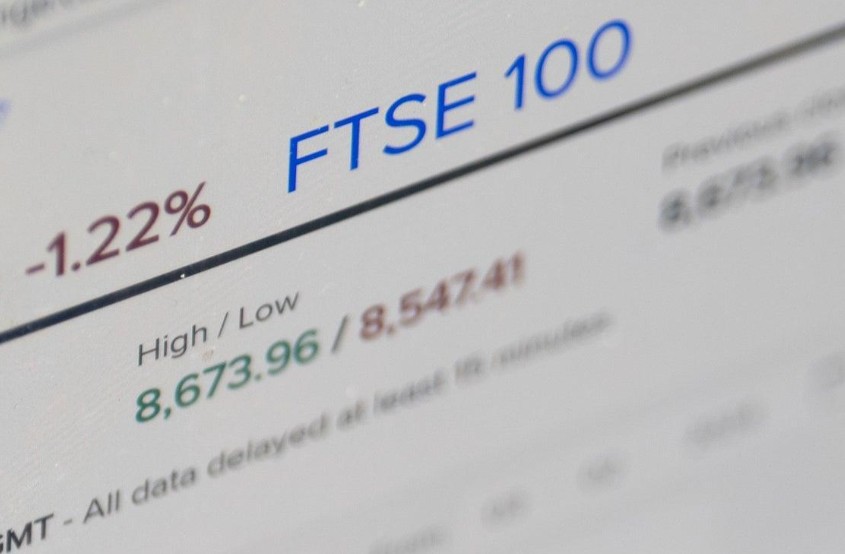
FTSE 100 contracts have declined in British financial markets, reflecting a state of concern among investors due to rising geopolitical tensions. At the same time, the British pound has stabilized following a series of fluctuations, as investors await developments regarding Iran's plans and their potential impact on global markets.
These movements occur during a period of increasing pressure on the global economy due to multiple crises, including rising energy prices and inflation. These factors have significantly affected financial markets, prompting investors to reassess their investments.
Details of the FTSE 100 Decline
The FTSE 100 contracts, which represent the 100 largest companies listed on the London Stock Exchange, experienced a notable decline of up to 0.5% at the start of trading. This drop comes at a sensitive time, as investors are keenly watching for any signals regarding how Iranian plans may affect global markets.
On the other hand, the British pound has stabilized after experiencing significant fluctuations in recent weeks. Investors are closely monitoring any developments that could impact the value of the British currency, especially given the current economic conditions.
Background & Context
Historically, British financial markets have been prone to fluctuations due to geopolitical events. In recent years, the UK has faced numerous economic challenges, ranging from its exit from the European Union to the impacts of the COVID-19 pandemic. These events have contributed to increased uncertainty in the markets.
Iran, for its part, plays a pivotal role in the region, with its plans and policies affecting many countries. Tensions between Iran and Western nations, particularly the United States, could lead to significant changes in financial markets.
Impact & Consequences
The decline in FTSE 100 contracts could have wide-ranging effects on the British economy. If this trend continues, it may lead to increased anxiety among investors, potentially affecting both foreign and domestic investments. Additionally, the stability of the British pound may provide some hope for restoring confidence in the markets.
Developments in Iran may also impact oil prices, which could increase pressures on the global economy. Rising oil prices could lead to heightened inflation, placing additional pressures on central banks to take stringent actions.
Regional Significance
These developments highlight the influence of geopolitical events on financial markets, necessitating the attention of investors and analysts. The interconnectedness of global economies means that events in one region can have far-reaching implications elsewhere.
In conclusion, as investors navigate these turbulent waters, the focus remains on how geopolitical tensions, particularly those involving Iran, will shape market dynamics and economic stability in the coming months.