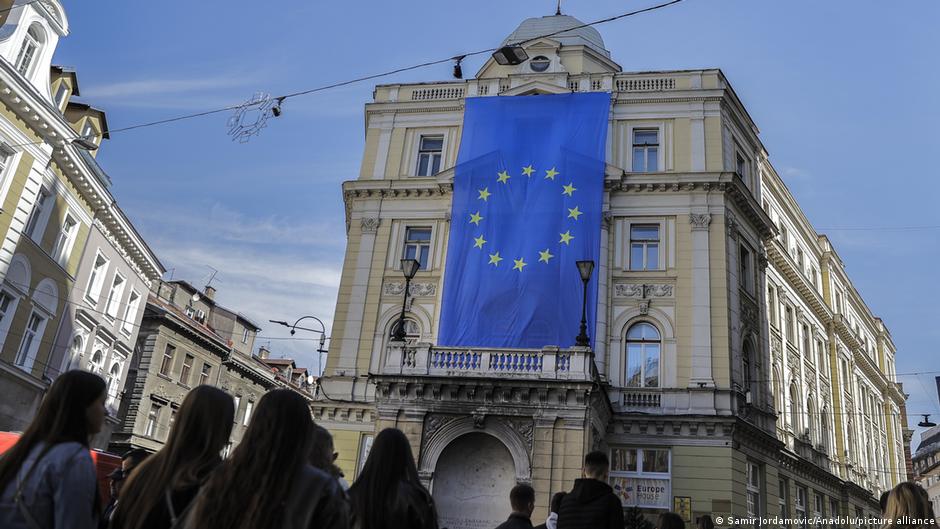
The Southern Gas Pipeline project, aimed at connecting Bosnia and Herzegovina to the liquefied natural gas terminal in Croatia, represents a strategic move that could negatively impact the country's aspirations to join the European Union. This initiative comes at a time when Bosnia is seeking to decrease its dependence on Russian gas, particularly following Russia's full-scale invasion of Ukraine, which has prompted the European Union to urge member and candidate countries to reduce ties with Russian energy.
Bosnia imports nearly all its gas from Russia, making this project a crucial step towards diversifying energy sources and opening a connection to the European gas market through Croatia. Last March, Bosnian lawmakers approved legislation designating the newly established AAFS Infrastructure and Energy as the main investor in the project, despite its lack of known experience in pipeline construction.
Event Details
This decision has raised significant concerns in Brussels, where Luigi Soricca, the EU ambassador to Bosnia, wrote to Bosnian leadership, warning of the necessity to adhere to European laws. He emphasized the importance of considering the commitments outlined in the Energy Treaty when drafting energy-related legislation. He noted that it is essential for the laws to align with the European Commission recommendations to maintain the country's progress towards EU membership.
The issue here is not solely about the pipeline itself but rather about how the contract is awarded. The EU supports reducing reliance on Russian energy but insists that such projects follow transparent procedures and public procurement rules. This project has raised questions in Bosnia, where Ivana Korajlic from Transparency International warned that avoiding transparent procedures would set a dangerous precedent.
Background & Context
Historically, Bosnia has been seeking to join the EU since its official application in 2016, achieving candidate status in 2022. However, the accession process has been hampered by slow reforms and political divisions. Official negotiations for EU membership began in 2024, but progress has stalled due to governance issues and failure to meet European standards.
Analyst Bertha Lopez Dominic from the European Policy Center in Brussels stated that Bosnia's inability to adopt necessary laws in recent years has led the EU to retract its demands and soften its standards. She considers it positive that the EU maintains its criticisms and insists that energy security legislation aligns with European guidelines.
Impact & Consequences
The issue is not limited to the political aspect; Bosnia and other countries in the Western Balkans may lose significant EU funding if they fail to implement agreed-upon reforms. Estimates suggest that Bosnia could lose nearly 374 million euros under the EU's growth plan if delays in implementation continue.
This could give Brussels significant leverage, as freezing funds has proven effective in pushing Bosnia towards necessary reforms. However, it remains unclear whether EU interventions will be sufficient to change the course of the project, but there is consensus that change would be in the interest of Bosnia and Herzegovina.
Regional Significance
This issue is important for the Arab region, highlighting the significance of diversifying energy sources and relying on alternative resources. Amid current geopolitical tensions, many Arab countries are seeking to reduce their dependence on traditional energy, reinforcing the need for sustainable energy strategies. European experiences in this field may offer valuable lessons for Arab countries in their pursuit of energy security.
In conclusion, the question remains open as to whether Bosnia will be able to balance its national interests with EU requirements, reflecting broader challenges faced by countries in the region in their quest for sustainable development.