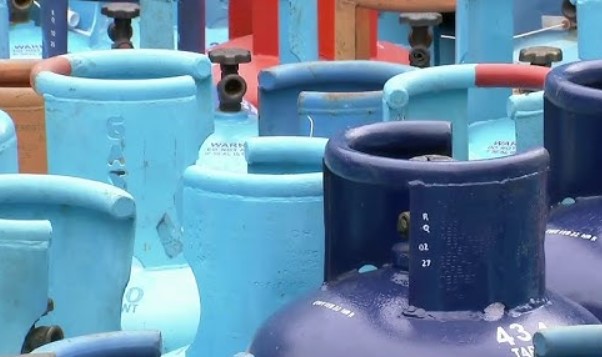
The Indonesian company Pertamina has announced a new increase in liquefied gas prices, with the cost of a 12 kg gas cylinder rising from 192,000 rupiah to 228,000 rupiah, marking an increase of 18.75%. This is the first price hike of its kind since the beginning of 2023, occurring at a sensitive time for the Indonesian economy.
The new prices are effective in several regions, including Jakarta, Banten, West Java, and Central Java, raising concerns among citizens about the impact of this increase on living costs.
Details of the Price Increase
This price increase comes amid government efforts to ensure stability in the local market. The Coordinating Minister for Food Affairs, Zulkifli Hasan, confirmed that the government is working to secure food supplies for Indonesian pilgrims, despite global geopolitical challenges. He emphasized that the government ensures that pilgrims will not be affected by rising prices.
In another context, the Coordinating Minister for Infrastructure, Agus Harimurti Yudhoyono, announced plans to develop a railway network on the island of Kalimantan, where the government aims to construct 2,772 kilometers of railway to enhance logistical connectivity in the region.
Background & Context
Historically, Indonesia has experienced fluctuations in energy prices, affecting citizens' lives. Indonesia is one of the largest natural gas producers in the region, but global and local economic challenges directly impact prices.
The Indonesian government seeks to achieve economic stability through infrastructure development and investment enhancement, which helps improve citizens' living standards.
Impact & Consequences
The increase in liquefied gas prices poses a significant challenge for the government, as it may lead to higher living costs and inflation. This price hike is expected to affect various economic sectors, including transportation and industry.
Furthermore, the development of the railway network in Kalimantan could contribute to improving the movement of goods and passengers, thereby boosting the local economy and increasing job opportunities.
Regional Significance
Indonesia is one of the largest Islamic countries, and any changes in its economic policies affect Arab nations, particularly in trade and energy sectors. Arab countries may experience impacts from these changes, especially given the increasing reliance on energy.
In conclusion, Indonesia remains at the heart of global economic events, as the government strives to balance economic growth with price stability.