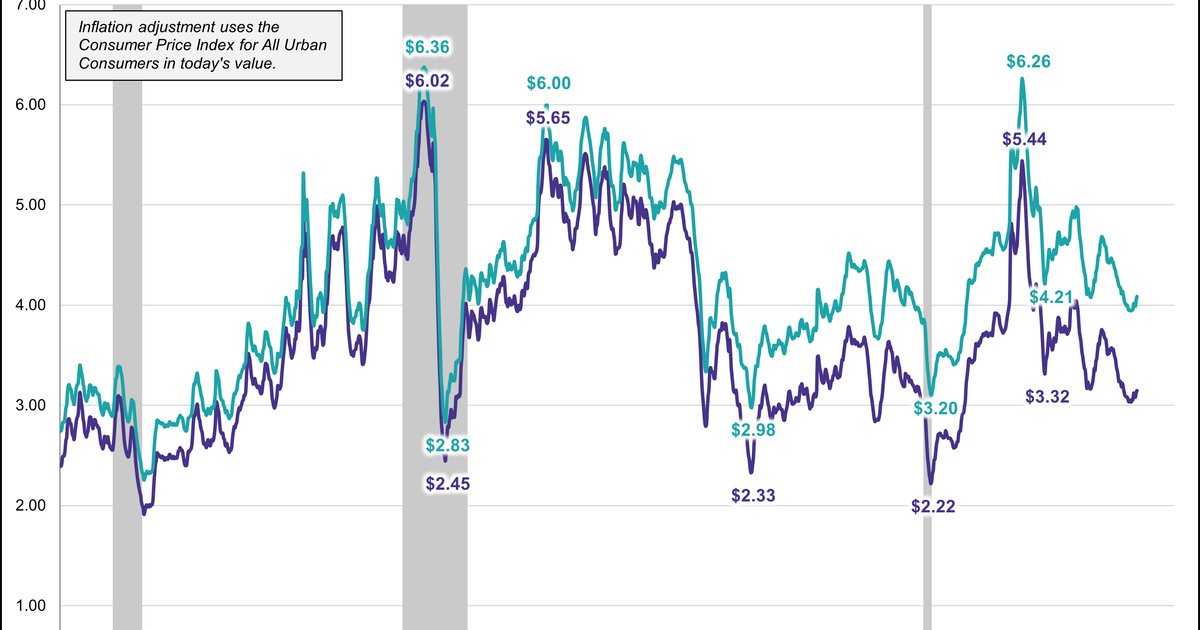
Gas prices in the United States have surpassed $4 per gallon, raising questions about how this will affect the Federal Reserve's decisions regarding interest rates. In this context, it appears that investors expect the Federal Reserve to maintain interest rates unchanged, or even move towards lowering them later this year, as policymakers weigh the risks associated with rising energy prices and their impact on economic growth.
In statements made by Federal Reserve Chair Jerome Powell, he indicated that raising interest rates at this time could be the wrong choice for an economy already facing a downturn in the labor market and increasing recession fears. Powell emphasized that the effects of any tightening in monetary policy would not be felt until some time later, meaning that the impact of rising oil prices might have ended before the effects of new policies begin to influence the economy.
Event Details
As financial markets swung between expectations of rate hikes and cuts, Powell's remarks helped to clarify the situation. Days ago, traders began considering the possibility of raising interest rates after inflation data showed that import prices had risen more than expected. However, Powell's comments helped to calm fears, indicating that the Federal Reserve might consider lowering rates instead of raising them.
Current forecasts suggest that there is only a 2.1% chance of raising interest rates by the end of the year, despite gas prices exceeding $4 per gallon and crude oil prices surpassing $102 per barrel. Nevertheless, there remains significant uncertainty regarding the direction interest rates will take in the future.
Background & Context
Historically, energy prices have played a pivotal role in shaping monetary policy. During economic crises, the Federal Reserve often resorts to raising interest rates to combat inflation. However, the current situation is different, as the U.S. economy faces multiple challenges, including declining consumer demand and increasing recession fears.
In recent years, financial markets have experienced significant volatility due to geopolitical events, such as conflicts in the Middle East and their impact on oil prices. These factors make it difficult for economic policymakers to make swift decisions, as they must consider the potential effects on economic growth.
Impact & Consequences
The fears of "demand destruction" resulting from rising energy prices are among the most significant challenges facing the Federal Reserve. According to economist Joseph Brusuelas, rising prices may force individuals and businesses to cut back on spending, leading to a decline in sales and investments. This, in turn, could negatively affect the labor market, as job opportunities may shrink due to reduced economic activity.
Some analysts expect that the Federal Reserve may be compelled to take more drastic measures than usual if economic pressures persist. In this context, there may be a need for further interest rate cuts, which could stimulate economic growth.
Regional Significance
Arab countries are directly affected by rising oil prices, as they are among the largest producers and exporters of oil in the world. Any increase in energy prices could impact the economies of these countries, potentially leading to increased government revenues but also rising living costs.
In light of these circumstances, Arab nations must be prepared to address the economic challenges arising from oil price fluctuations, including enhancing economic diversification and reducing reliance on oil as a primary source of revenue.