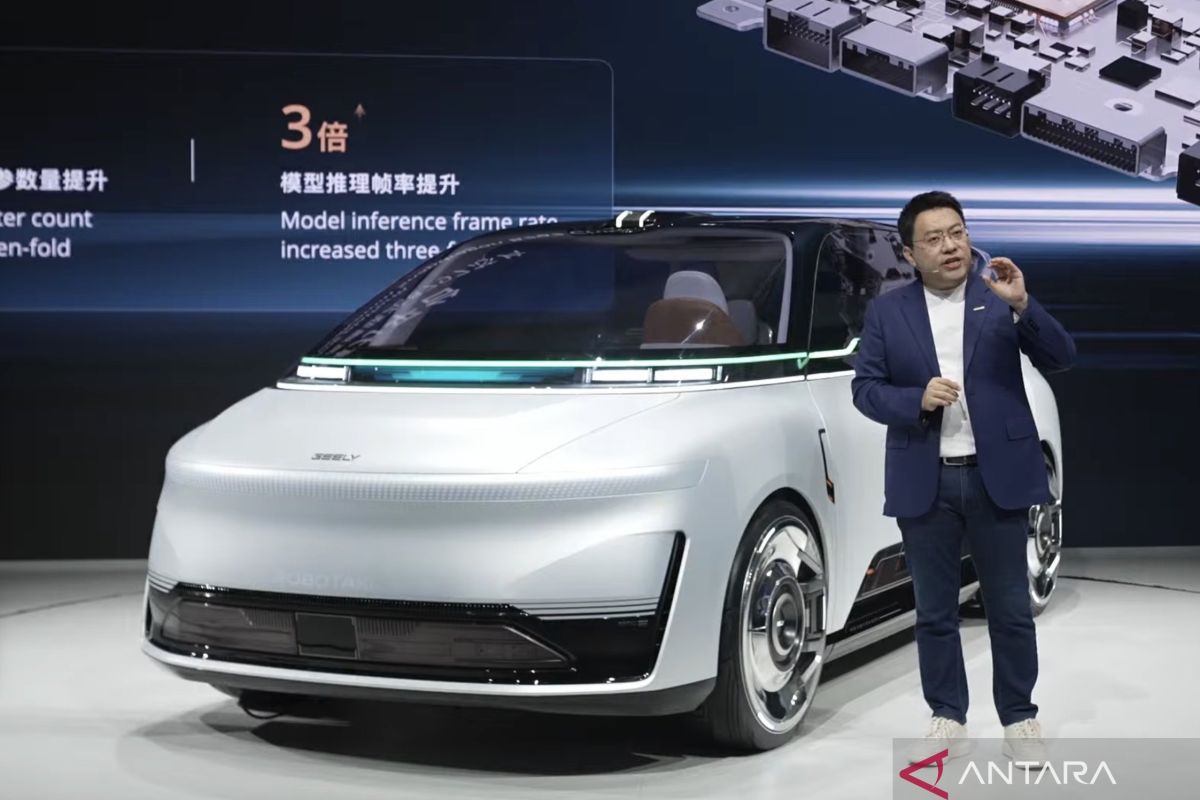
Geely, a leading automotive manufacturer in China, has revealed its first model of the robotic taxi, the EVA Cab, during the Beijing Auto Show. Geely aims to start mass production of this vehicle by 2027, showcasing the increasing trend towards the use of self-driving cars in transportation services.
The EVA Cab features an innovative design that combines elegance with functionality, with its exterior shape inspired by modern designs, making it stand out among competitors. The vehicle is equipped with advanced technologies, including a Level 4 autonomous driving system, allowing it to operate independently without the need for driver intervention.
Specifications and Features
The EVA Cab presents a modern appearance, featuring a front design that emphasizes aerodynamics and aesthetics. The interior is designed for passenger comfort, with spacious seating and state-of-the-art infotainment systems. The vehicle's technology includes sensors and cameras that provide a 360-degree view, enhancing safety and navigation capabilities.
In addition to its autonomous driving capabilities, the EVA Cab is designed to be environmentally friendly, utilizing electric power to reduce emissions. This aligns with global efforts to promote sustainable transportation solutions. Geely has also integrated smart connectivity features, allowing passengers to interact with the vehicle through voice commands and mobile applications.
Background & Context
The introduction of the EVA Cab is part of Geely's broader strategy to innovate within the automotive industry. As cities around the world face challenges related to traffic congestion and pollution, the demand for autonomous vehicles is increasing. Geely's initiative reflects a commitment to addressing these issues through technological advancement.
China has been at the forefront of the autonomous vehicle movement, with various companies investing heavily in research and development. The EVA Cab is expected to play a significant role in this evolving landscape, providing a glimpse into the future of urban transportation.
Impact & Consequences
The launch of the EVA Cab could have profound implications for the transportation sector. By offering a robotic taxi service, Geely aims to enhance the efficiency of urban mobility, potentially reducing traffic congestion and improving the overall travel experience for passengers.
Moreover, the introduction of autonomous taxis like the EVA Cab may lead to changes in regulatory frameworks as governments adapt to new technologies. This shift could pave the way for more widespread acceptance and integration of self-driving vehicles into public transportation systems.
Regional Significance
In the context of China's rapidly growing urban centers, the EVA Cab represents a significant advancement in transportation technology. As cities continue to expand, the need for innovative solutions to manage urban mobility becomes increasingly critical.
Geely's initiative is likely to inspire other manufacturers in the region to explore similar technologies, fostering a competitive environment that could accelerate the development of autonomous vehicles across Asia.
In conclusion, the EVA Cab is not just a technological marvel but also a step towards a future where smart mobility solutions are commonplace. As Geely prepares for mass production, the automotive industry watches closely to see how this innovative vehicle will reshape urban transportation.