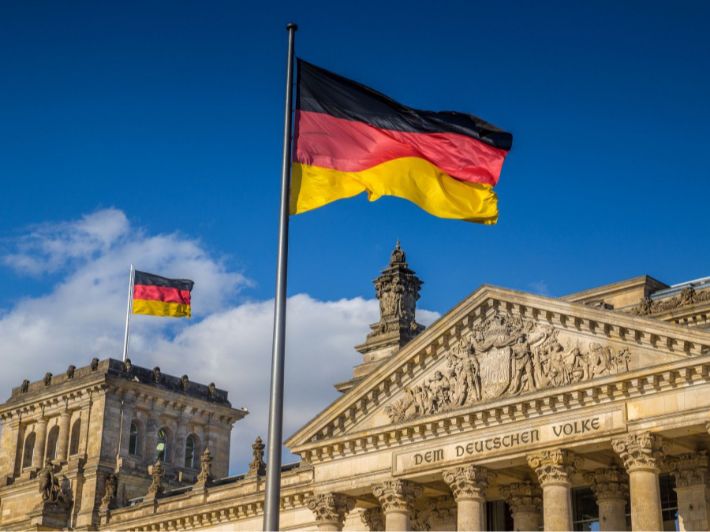
Germany, the largest economy in Europe, is under mounting pressure as it was expected to see a notable recovery. However, the surge in energy costs resulting from the conflict in the Middle East has led the federal government to halve its growth forecasts.
Under scrutiny is Germany's main financial stimulus program, as ministers seek to contain the fallout from high energy bills. Before the outbreak of war, the German economy was buoyed by an increase in industrial orders and improved sentiment, but the current situation threatens this recovery.
Details of the Situation
The Federal Ministry for Economic Affairs and Energy has revised its growth forecast for 2026 down to 0.5% from a previous estimate of 1%, while the forecast for 2027 has been cut from 1.3% to 0.9%. Inflation is expected to reach 2.7% this year and 2.8% next year.
Carsten Brzeski, Global Head of Macro Research at ING Bank, noted that industrial production was already faltering before the war broke out, having declined by 0.3% month-on-month in February, showing no annual growth. The conflict with Iran has sharply dampened business sentiment.
Background & Context
The Ifo Business Climate Index fell to 84.4 points in April, the lowest level since May 2020. Current assessments dropped from 86.7 to 85.4 month-on-month, while future expectations fell from 85.9 to 83.3.
Separately, the ZEW Economic Sentiment Index decreased by 16 points to -17.2 in April, reflecting a growing pessimism about the economic outlook. Clemens Fuest, President of the Ifo Institute, confirmed that the German economy is under strong pressure due to the Iran crisis.
Impact & Consequences
Germany remains one of the largest energy importers in Europe, with about 6% of its imports coming from the Middle East. Energy-intensive industries account for approximately 17% of total industrial value added. The coalition government has approved a two-month tax exemption on gasoline and diesel worth nearly 1.6 billion euros.
Minister of Economic Affairs and Energy, Katharina Reiche, confirmed that the government has acted swiftly to alleviate the burden of rising fuel costs. Brzeski pointed out that the war has once again highlighted Germany's heavy reliance on energy imports, necessitating a better and more committed energy strategy.
Regional Significance
The Arab region is directly affected by the conflict in the Middle East, as rising energy prices impact the global economy and increase pressures on energy-importing countries. Additionally, the downturn in the German economy could affect trade and investment relations with Arab nations.
In conclusion, the current situation in Germany requires a rapid and effective government response to ensure economic stability and avoid greater negative repercussions.