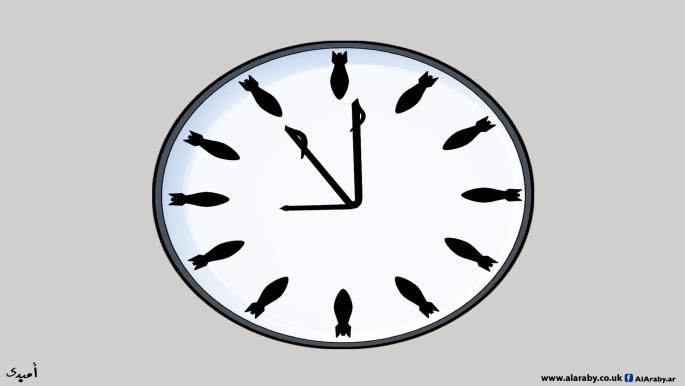
Global voices are increasingly demanding a halt to military escalation in conflict zones, as attention turns towards peaceful solutions as an alternative to war. Several countries and international organizations have expressed concern over the negative impact that war could have on security and stability in the region.
Amid multiple crises affecting the world, there is an urgent need for dialogue and understanding between the conflicting parties. Many major countries have emphasized the importance of diplomacy as a means to resolve disputes, warning that continued escalation could lead to dire consequences.
Details of the Situation
Events are unfolding in conflict zones, where clashes between opposing parties are intensifying. Reports have noted an increase in military operations, exacerbating the suffering of civilians and complicating humanitarian relief efforts. In this context, the United Nations has called for an immediate ceasefire, stressing the importance of protecting civilians and providing humanitarian assistance.
Observers have pointed out that military escalation could worsen humanitarian crises, as millions suffer from shortages of food, water, and healthcare. Humanitarian organizations have expressed their readiness to provide support, but they face significant challenges due to deteriorating security conditions.
Background & Context
Historically, the region has witnessed numerous armed conflicts that have left negative impacts on security and stability. Previous experiences have shown that military solutions only exacerbate situations, necessitating the search for peaceful resolutions. In recent years, the world has seen significant political transformations, opening the door to new opportunities for dialogue and understanding.
The current circumstances require a concerted effort from both international and local entities to find root solutions to conflicts. Experiences have demonstrated that dialogue is the optimal path to achieving peace and stability, which demands strong political will from all involved parties.
Impact & Consequences
If military escalation continues, the consequences will be severe on all fronts. This could lead to worsening humanitarian crises and an increase in the number of displaced persons and refugees, placing an additional burden on neighboring countries. Furthermore, the continuation of conflicts may negatively impact the global economy, as markets and prices could be significantly affected.
Moreover, military escalation could pave the way for external interventions, complicating situations further and exacerbating crises. Therefore, the need for dialogue and understanding remains urgent to maintain security and stability in the region.
Regional Significance
The Arab region is among the most affected by armed conflicts, with many countries suffering from political and economic crises. Recent events have shown that military escalation only exacerbates conditions, highlighting the necessity for peaceful solutions. Additionally, stability in the region directly reflects on regional and international security.
In conclusion, hope remains pinned on the international community to play its role in supporting peace efforts and working towards finding root solutions to conflicts. Dialogue and understanding are the only paths to achieving stability and security, which requires concerted efforts from all concerned parties.