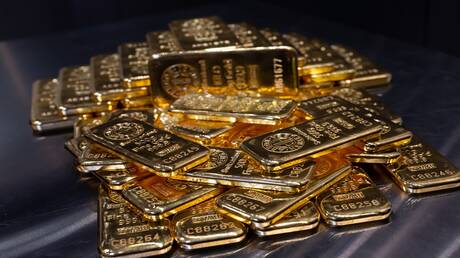
Gold prices saw a slight increase on Tuesday as markets reacted to escalating tensions in the Middle East. This price rise comes at a time when investors are closely monitoring the deadline set by U.S. President Donald Trump for Iran, which pertains to the reopening of the Strait of Hormuz, one of the world's most crucial waterways.
Gold prices are considered a key indicator of the global economic state, as investors turn to gold as a safe haven during times of uncertainty. With the deadline approaching, concerns are growing about the potential impact on oil markets and the global economy as a whole.
Details of the Event
Reports indicate that spot gold contracts rose by 0.2%, bringing the price of an ounce to approximately $1,800. This increase comes at a sensitive time as Iran seeks to maintain its interests in the region while Trump pressures Tehran to comply with his demands regarding freedom of navigation in the Strait of Hormuz.
It is noteworthy that the Strait of Hormuz is a vital transit point for oil transportation, with around 20% of total global oil exports passing through it. Any escalation in tensions in this region could have far-reaching effects on oil prices and, consequently, on the global economy.
Background & Context
Historically, the Strait of Hormuz has witnessed numerous tensions, particularly between Iran and the United States. In recent years, these tensions have notably escalated, leading to increases in both oil and gold prices. In 2019, the region experienced a series of maritime incidents that affected navigation.
Additionally, the economic sanctions imposed on Iran by the United States have complicated the situation further, as Tehran seeks to bolster its position in the region by supporting its allies in Iraq, Syria, and Yemen.
Impact & Consequences
If an agreement regarding the Strait of Hormuz is not reached, it could lead to a significant increase in oil prices, which would impact the global economy overall. Rising oil prices may also result in increased inflation in many countries, adversely affecting economic growth.
On the other hand, escalating tensions could lead to heightened demand for gold as a safe haven, potentially driving prices even higher. In this scenario, investors may find themselves in a difficult position, needing to make quick decisions amid changing circumstances.
Regional Significance
Arab oil-producing countries are among the most affected by tensions in the Strait of Hormuz. Any escalation in this area could directly impact the economies of these nations, which heavily rely on oil exports.
Furthermore, rising gold prices may influence investments in the region, as investors may turn to gold as a means of protection against economic fluctuations. Under these circumstances, it is crucial for Arab countries to closely monitor developments and take necessary measures to safeguard their economic interests.
In conclusion, the situation in the Strait of Hormuz remains a pivotal factor affecting the global economy, and investors and concerned nations must be prepared to deal with any developments that may arise in the coming days.