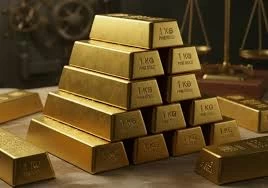
Gold prices have experienced a notable rise during market transactions, with futures for the yellow metal for June delivery increasing by 3.6%, equivalent to $169.70, bringing the price per ounce to $4,854.40, after prices touched $4,888.
The spot price of gold also rose by 2.7%, reaching $4,832.3 per ounce. Meanwhile, silver prices surged by 6.2%, trading at $77.518 per ounce. Additionally, the dollar index, which measures the performance of the US currency against a basket of six major currencies, fell by more than 1% to 98.82 points.
Details of the Event
Silver futures for May delivery increased by 7.6%, reaching $77.47 per ounce. The spot prices for platinum rose by approximately 4.3% to $2,045.73, while palladium prices increased by 5.5%, reaching $1,552.98.
These price increases come at a sensitive time, as markets await the release of the minutes from the Federal Reserve's monetary policy meeting held in March, which is expected to provide further insights into the outlook for US monetary policy.
Background & Context
Gold prices are significantly influenced by global geopolitical and economic events. Following President Trump's announcement of the suspension of military operations against Iran, markets reassessed the risks associated with investing in precious metals. Gold is considered a safe haven during times of uncertainty, which explains the current rise in its prices.
Historically, gold prices have experienced significant fluctuations amid political and economic crises. In recent years, US policies have had a considerable impact on gold prices, with prices rising notably during times of geopolitical tensions.
Impact & Consequences
The current increases in gold prices could have multiple effects on financial markets. When gold prices rise, investors may reduce their investments in other assets such as stocks, potentially leading to volatility in financial markets.
Moreover, rising gold prices may affect economies that rely on exporting precious metals, as it could lead to increased government revenues. Conversely, higher prices may increase production costs for certain industries.
Regional Significance
The Arab region is among the largest gold producers in the world, with precious metals playing a vital role in the economies of many countries. An increase in gold prices could lead to increased investments in the mining sector, boosting economic growth in some Arab nations.
Furthermore, the rise in gold prices may influence monetary policies in Arab countries, as central banks may seek to adjust their policies to respond to changes in global markets.
In conclusion, gold remains one of the most important assets in financial markets, and the rise in its prices reflects global geopolitical and economic tensions. Investors should closely monitor developments, especially amid rapid changes in monetary policies.