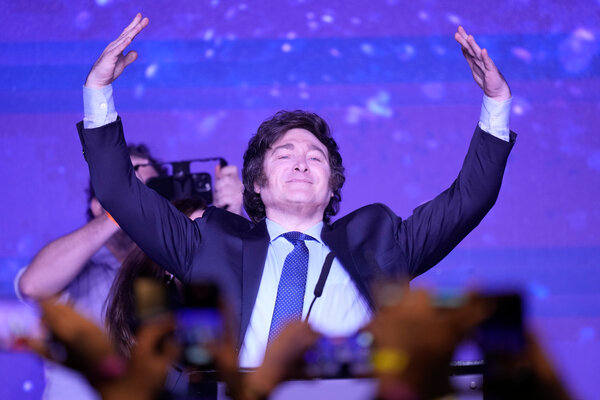
The Argentine government under President Javier Milei has maintained its ban on journalists entering the presidential palace for a third consecutive day, triggering a wave of criticism over violations of freedom of expression and the right to access information. This decision comes at a sensitive time as Milei seeks to consolidate his power in the face of increasing criticism.
Since taking office in December 2023, Milei has exhibited a strained relationship with the media, often directing sharp insults at journalists. The government has justified this ban by claiming it is investigating allegations of "illegal spying," which many view as a pretext for suppressing press freedom.
Details of the Incident
In recent days, the government has barred accredited journalists from entering the presidential palace, announcing that the presidential security agency is investigating journalists from the channel Todo Noticias for allegedly photographing in restricted areas within the palace. The two journalists have denied these accusations, asserting that they had permission to film and that the areas they recorded were used by children during school trips.
This ban has provoked strong reactions from the Argentine Media Association, which considers this measure a direct threat to freedom of expression and the right to access information, both of which are fundamental pillars of a democratic system. Additionally, the financial news outlet Ámbito Financiero has sought an urgent court ruling to compel the government to allow access to information.
Background & Context
Historically, Argentina has witnessed tensions between governments and the media, with previous attempts to suppress press freedom. However, the current situation is distinct due to the harsh policies adopted by Milei, who is seen as a strong ally of former U.S. President Donald Trump. This relationship may reflect new political trends in the region.
Since assuming the presidency, Milei has taken controversial steps, including cutting the budget for government media, which has heightened tensions with the press. These policies reflect a trend toward increasing control over the information available to the public.
Impact & Consequences
The prohibition of journalists from entering the presidential palace is seen as an indicator of declining press freedom in Argentina, which could negatively impact democracy in the country. The continuation of these policies may lead to an erosion of trust between the government and the media, affecting journalists' ability to perform their role in monitoring power.
Moreover, this situation may raise concerns within the international community, as press freedom is considered a fundamental standard of democracy. International pressure could lead to a change in Argentine government policies if these violations persist.
Regional Significance
Press freedom is a sensitive issue in many Arab countries, where media outlets face significant challenges under authoritarian regimes. Events in Argentina may serve as either a model to emulate or a warning for countries suffering from the suppression of free expression.
Furthermore, the relationship between Milei and Trump may raise questions about the impact of U.S. policies on press freedom in the region, where the United States is viewed as a major supporter of democracy and human rights.
In conclusion, the situation in Argentina remains under scrutiny, as the ban on journalists entering the presidential palace indicates a concerning decline in freedom of expression, necessitating action from the international community to protect journalists' rights.