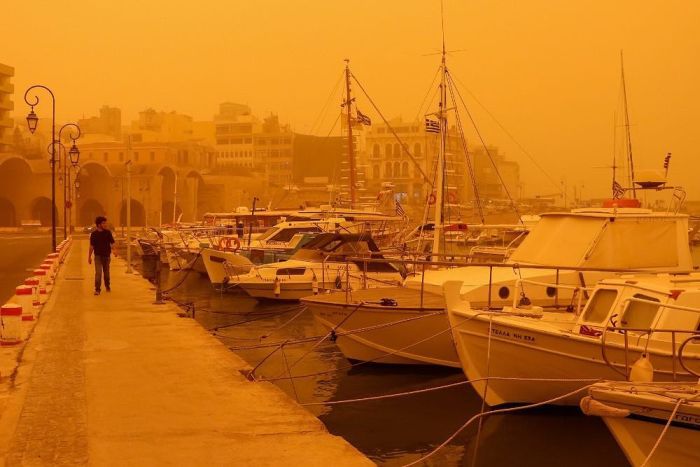
Crete, a Greek island, is currently experiencing a dust storm originating from the African desert, leading to deteriorating air quality and heightened health concerns among residents. The storm, which began in recent days, has disrupted daily life and raised alarms among authorities.
Reports indicate that this natural phenomenon, known as a "dust storm," has caused reduced visibility in some areas, affecting traffic and outdoor activities. Health authorities have warned of potential risks for individuals suffering from respiratory issues.
Details of the Event
Information suggests that the African dust has reached Crete due to strong winds blowing from the south. This dust has covered streets and homes with a thick layer, making the scenery on the island appear unusual. Local authorities have issued warnings to citizens, urging them to avoid outdoor activities as much as possible.
This phenomenon is common in Mediterranean regions, where strong winds transport dust from the Sahara to coastal areas. However, the intensity of the current storm has raised greater concerns than usual, with high levels of air pollution recorded in some regions.
Background & Context
Historically, Crete has experienced many harsh weather phenomena, including sandstorms. However, the impact of climate change has intensified these occurrences, making dust storms more frequent. In recent years, many Mediterranean countries, including Greece, have seen an increase in the number of days affected by African dust.
Crete is one of Greece's main tourist destinations, attracting visitors from around the world. However, with the rise of these weather phenomena, the tourism sector may be negatively impacted, prompting authorities to take preventive measures.
Impact & Consequences
Dust storms affect public health, as they can exacerbate asthma and respiratory diseases. Studies have shown that exposure to dust can increase the risk of cardiovascular diseases. Therefore, health authorities in Crete have urged residents to take necessary precautions, such as wearing masks and avoiding strenuous physical activities.
Economically, these phenomena may impact tourism, as tourists might avoid visiting the island under unfavorable weather conditions. Additionally, the deterioration of air quality can affect local agriculture, threatening the livelihoods of many farmers.
Regional Significance
Dust storms are a natural phenomenon that affects many Arab countries, especially those located in North Africa. With the increase in climate change, these occurrences may rise, necessitating Arab nations to take preventive measures to mitigate their negative impacts on public health and the economy.
In conclusion, dust storms remain a natural phenomenon that requires greater awareness from local communities, both in Crete and in Arab countries, to ensure the safety of populations and protect the economy.