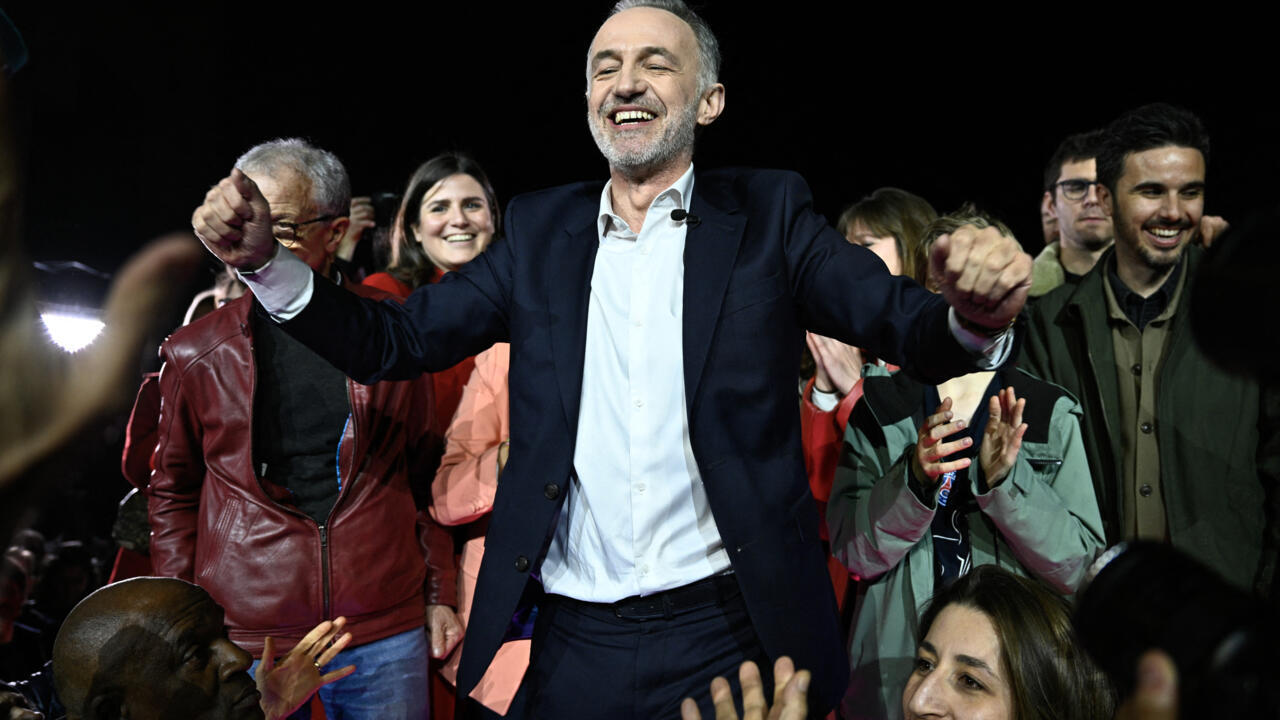
The preliminary results for the second round of municipal elections in France were announced on Sunday, where Emmanuel Grégoire, the Socialist Party candidate, achieved a remarkable victory in Paris with a substantial lead over his rivals. Grégoire garnered 53.1% of the votes, while Rachida Dati, the former minister from the Republicans, received 38%. Sofia Chikirou from La France Insoumise came third with 8.9%.
The elections took place in over 1,500 French municipalities, with a voter turnout of approximately 48.1% by 5 PM, raising expectations that the turnout could reach 57%, reflecting a significant increase compared to the 2020 elections.
These elections remind us of the importance of local roles in shaping public policies, especially in major cities like Paris and Marseille. Mayors are considered the most trusted among elected officials according to opinion polls.
The competition in Paris and Marseille was particularly fierce, as various candidates sought to assert their strength amid complex political changes. In Marseille, Benoît Payan from the Socialist Party is expected to win against National Rally candidate Franck Allisio. The intense rivalry in these elections is due to the significant shifts in the French political landscape, especially following the upcoming presidential elections.
In her comments, Sarah Knavo expressed her sadness at the failure of right-wing candidates to secure victory, stating, "I now hope for the elected officials to be strong opponents." Knavo chose to support Dati after withdrawing from the race despite achieving 10.4% of the votes.
These elections represent more than just local positions; they reflect the current political struggles in France, including the rise of the far-right in the political arena. Polls have shown a strong competition between the far-right and mainstream parties, making these elections a critical test for the ability to sustain momentum.
The impact of these election results extends beyond France, potentially affecting the rest of Europe, as local election outcomes can influence general elections in the country, serving as an indicator of overall public opinion trends.
The results in Paris and Marseille are expected to lead to changes in local policies and shape the strategies of political parties in the future. In light of this shifting landscape, everyone is watching what will happen in the upcoming presidential elections and how these changes will affect the French people.
Amid all these transformations, the focus remains on how the newly elected mayors will manage the increasing local, economic, and social challenges. The primary goal should be to improve the quality of life for employees and residents, considering climate change and new related challenges.