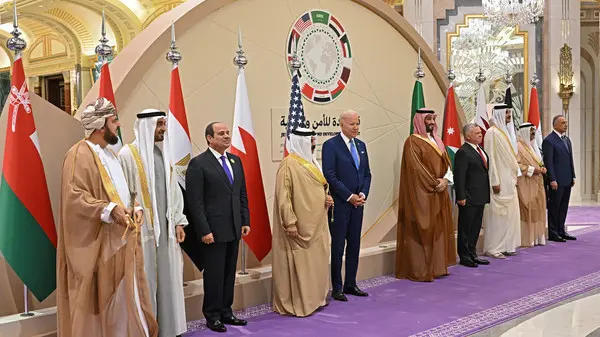
On Tuesday, leaders of the Gulf Cooperation Council convened an extraordinary summit in Jeddah, Saudi Arabia, focusing on the deteriorating security situation in the region. This summit comes more than two weeks after a ceasefire was initiated between Iran on one side and Israel and the United States on the other, following a five-week war that significantly impacted Gulf countries.
The summit aims to enhance coordination among Gulf states to address increasing security challenges, particularly following Iranian attacks targeting several Gulf nations in recent weeks. Many leaders emphasized the importance of Gulf unity in facing these threats.
Details of the Summit
The summit included the attendance of leaders from member states of the Gulf Cooperation Council, where various security and political issues relevant to the region were discussed. There was a strong emphasis on the necessity of bolstering military and security cooperation among member states to counter any future threats. Additionally, discussions included ways to enhance economic relations between Gulf nations.
In a related context, U.S. President Donald Trump reiterated his rejection of the Iranian proposal calling for a halt to the war, complicating the security situation further. Trump expressed his readiness to support his Gulf allies in confronting Iranian threats.
Background & Context
This summit occurs at a sensitive time, as tensions between Iran and Gulf states have escalated. The five-week war resulted in numerous casualties and significant damage to infrastructure in some countries, greatly affecting security and stability in the region.
Historically, relations between Gulf states and Iran have been strained, with both countries vying for influence in the region. Recent years have seen a rise in tensions, making it essential to hold such a summit to coordinate Gulf efforts.
Impact & Consequences
The outcomes of this summit are expected to strengthen cooperation among Gulf states in addressing security threats. It may also improve relations among member countries, thereby enhancing regional stability. However, the greatest challenge remains how to deal with ongoing Iranian threats.
Furthermore, Trump's rejection of the Iranian proposal could complicate matters, potentially leading to heightened tensions in the region. Thus, the summit represents a crucial step toward achieving stability and security in the Gulf.
Regional Significance
This summit holds significant importance for Arab nations, reflecting Gulf states' efforts to enhance security and stability. Coordination among these countries may positively impact Arab relations overall.
Amid current tensions, Arab nations need to strengthen cooperation to confront shared challenges. Therefore, the results of this summit could have positive implications for regional security.
In conclusion, the Gulf summit in Jeddah represents an important step toward enhancing security cooperation among member states, amidst significant challenges facing the region. There remains hope that these efforts will lead to stability and security in the Gulf.