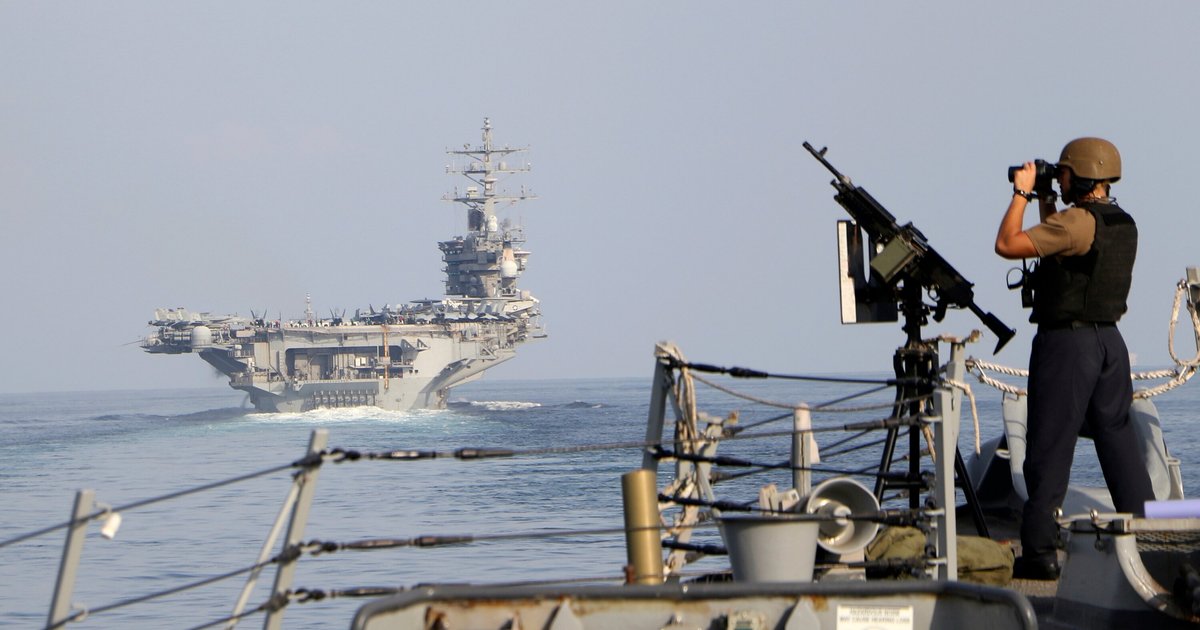
In a new escalation in the Middle East, the US Navy intercepted a commercial vessel suspected of violating the maritime blockade imposed on the region. This action comes amid rising military tensions, as Israel continues its military operations against Hezbollah in Lebanon.
In a related context, Israeli forces announced that they discovered tunnels belonging to Hezbollah in southern Lebanon, further heightening tensions between the two sides. These tunnels, believed to be used for military purposes, raise significant concerns for Israeli authorities, who view them as a direct threat to their national security.
Details of the Incident
The interception of the American ship is part of Washington's efforts to assert control over maritime routes in the region, especially amid escalating crises. The vessel is believed to have been carrying prohibited shipments, prompting the US Navy to take this action. This step reflects the increasing tensions between the United States and Iran, as the maritime blockade is considered part of a strategy to pressure Tehran.
On the other hand, the discovery of tunnels in southern Lebanon indicates an escalation in military activities by Hezbollah, which is regarded as one of the prominent armed factions in the region. Reports suggest that these tunnels may be used for transporting weapons and fighters, reflecting the party's strategy in countering Israeli threats.
Background & Context
Historically, the region has witnessed ongoing tensions between Israel and Hezbollah, especially since the war that erupted in 2006. Since then, military operations between the two sides have continued, with escalating mutual threats. Hezbollah is considered a key player in the conflict, enjoying significant Iranian support, which complicates the situation in the region.
In recent years, Hezbollah's military activities have increased, particularly with rising Israeli pressures. Additionally, tensions between the United States and Iran play a crucial role in shaping the course of events in the region, as both countries seek to achieve their strategic interests.
Impact & Consequences
Recent developments suggest that the situation in the Middle East may be heading towards further escalation. Maritime interceptions and military operations could trigger cascading reactions from the involved parties, potentially intensifying the conflict. These events may also impact oil prices and global markets, given the heavy reliance on maritime routes for energy transportation.
Moreover, these tensions could exacerbate humanitarian crises in the region, as civilians suffer from the effects of ongoing conflicts. International pressures on the involved parties to seek peaceful solutions are expected to continue, but recent events indicate that the path to peace remains long.
Regional Significance
Events in the Middle East directly affect Arab countries, where the Palestinian issue and the conflict with Israel remain among the most pressing concerns for Arab populations. Furthermore, the rising tensions between Iran and Western countries may reflect on the relationships between Arab states and Iran, complicating the regional landscape.
In conclusion, the region remains in a state of anticipation, as various parties seek to achieve their interests under complex circumstances. It is crucial for Arab countries to remain united in facing challenges and to strive for peaceful solutions to ongoing disputes.