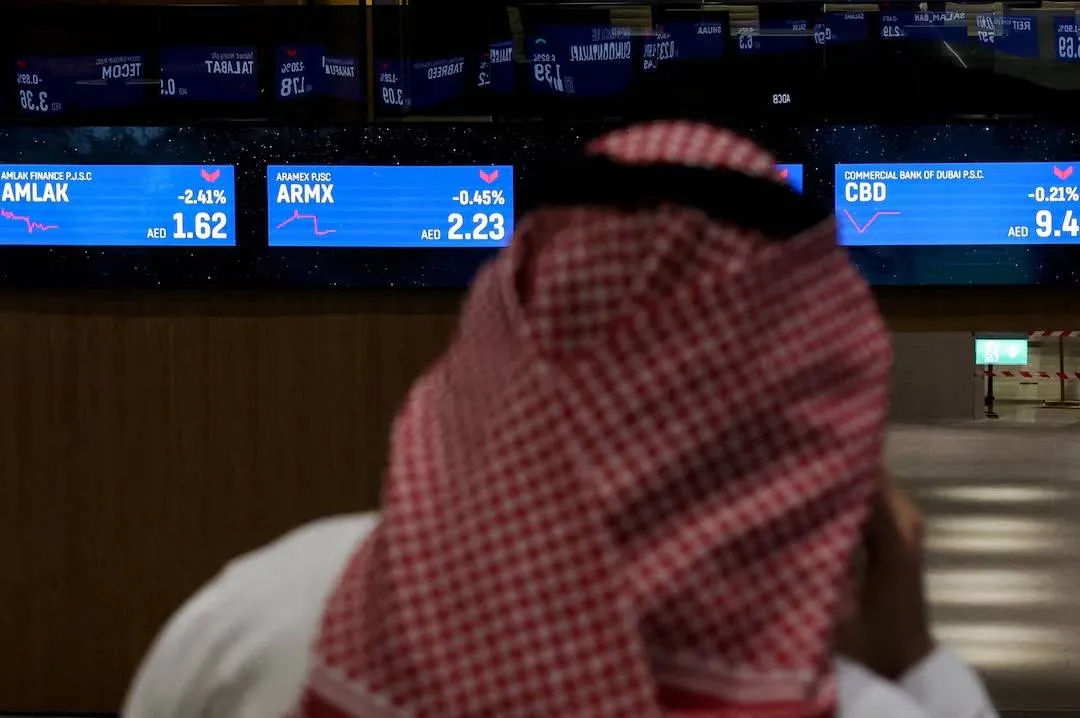
The stock markets in the Gulf region experienced a mixed performance at the beginning of trading on Monday, as a sense of caution prevailed among investors due to the stalled negotiations between the United States and Iran. Hopes for the resumption of diplomatic efforts diminished following U.S. President Donald Trump's cancellation of a planned visit by his envoys to Islamabad.
Trump confirmed that Iran could reach out if it wished to negotiate to end the ongoing two-month war, emphasizing the necessity for Tehran not to possess nuclear weapons. On the other hand, Iran stated that the United States must remove obstacles to any agreement, including the blockade imposed on its ports.
Event Details
At the same time, Iranian Foreign Minister Abbas Araghchi is in Russia, seeking support from President Vladimir Putin. In financial markets, the main index in Saudi Arabia fell by 0.1%, impacted by a 1.2% drop in the share of "Ma'aden," while the share of "Tadawul Group" saw a significant decline of 5.9% following a drop in its quarterly profits.
In contrast, the main index in Dubai rose by 1.2%, supported by a 1.8% increase in the share of "Emaar Properties," and a 2.5% rise in the share of "Salik." In Abu Dhabi, the index recorded an increase of 0.4% with the share of "Alpha Dhabi Holding" climbing by 2.8%, while the Qatari index declined by 0.1% due to a 0.3% drop in the share of "Qatar National Bank."
Background & Context
Oil prices rose in today's trading, increasing by approximately $3 per barrel, surpassing $108, following the breakdown of U.S.-Iran negotiations. The futures contracts for Brent crude reached $108.52 as of 09:38 GMT, up by about 3%, while U.S. crude rose by about 2.5% to $96.85 per barrel.
The breakdown of peace talks between the United States and Iran has prolonged the disruption of energy exports from the Middle East, raising concerns among markets and policymakers, especially ahead of a busy week of central bank meetings. Although the ceasefire has led to a freeze in most fighting, attention is now turning to the closure of the Strait of Hormuz, a critical point behind rising energy prices.
Impact & Consequences
Global agencies reported that Tehran proposed to open the Strait of Hormuz without addressing the nuclear issue, which could further complicate negotiations. The Bank of England is expected to keep interest rates unchanged this week, aiming to assess the increasing economic repercussions of the Iranian war, while investors are watching for any signals regarding monetary policy direction in the coming months.
The bank had maintained interest rates in March amid ongoing uncertainty about the conflict's impact on inflation and growth. With geopolitical ambiguity persisting, the bank is likely to make a similar decision on Thursday, according to reports.
Regional Significance
The British economy is considered one of the most vulnerable to the effects of rising energy prices resulting from the war, due to its heavy reliance on natural gas imports. Recent data has shown an increase in business input costs, reinforcing expectations of continued inflationary pressures throughout the next year. Conversely, other policymakers point to risks of a slowdown in the labor market and declining consumer and business confidence, intensifying the debate within the bank regarding the timing of any further tightening.
As uncertainty regarding the war's trajectory and its repercussions continues, the Bank of England is likely to reaffirm that it is "prepared to act" when necessary, without providing definitive signals about the timing of any changes. In this context, analysts believe the bank may prefer to keep interest rates unchanged until the end of the year, until the impact of the energy shock on the economy becomes clearer.