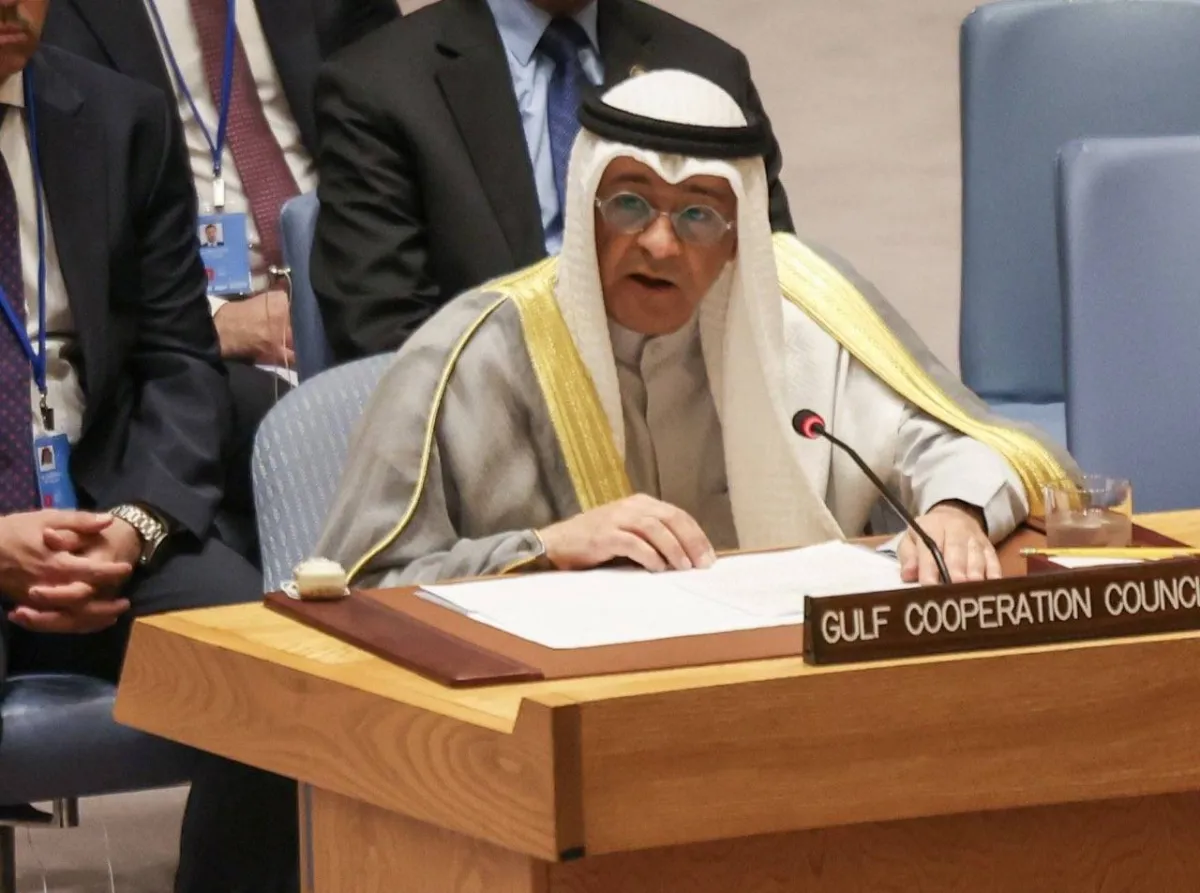
Jassim Al-Budaiwi, Secretary-General of the Gulf Cooperation Council, stated that the stability of the Arabian Gulf region is not merely a regional issue, but an urgent international necessity to ensure the continued functioning of the global economy and to avoid an energy crisis that could lead to a global recession. Al-Budaiwi stressed that the member states are extending their hand for peace, but they will not compromise their security or sovereignty.
These remarks were made during a high-level briefing presented to the United Nations Security Council at its headquarters in New York, where he noted that the Gulf states have been subjected to repeated Iranian aggression since February 28, 2026, manifested in ballistic missile and drone attacks targeting civilian and vital facilities, resulting in casualties, injuries, and significant material damage.
Details of the Incident
Al-Budaiwi reiterated his strong condemnation of the Iranian attacks, considering them a blatant violation of sovereignty and principles of good neighborliness, as well as a clear breach of international law and the UN Charter. He called on the Security Council to take immediate action to stop these attacks, protect maritime corridors, and ensure the continuity of international navigation, emphasizing the need to involve Gulf states in any discussions with Iran to enhance security and stability.
He also affirmed the right of Gulf states to self-defense in accordance with Article 51 of the UN Charter, indicating that the council will take all necessary measures to protect its sovereignty, territorial integrity, and citizens, while committing to avoid escalation.
Context and Background
These statements come at a time when the region is witnessing increasing military escalation, as Iran has closed the Strait of Hormuz and prevented the passage of commercial vessels, heightening tensions. Additionally, the Houthi group threatens to close the Bab el-Mandeb Strait, which constitutes a violation of international law.
In this context, Al-Budaiwi emphasized that the damages resulting from the cessation of navigation do not only affect the Gulf Cooperation Council states but extend to many countries worldwide that are suffering from shortages in their oil and gas needs.
Impact and Consequences
The Gulf states are seeking to establish normal relations with Iran while emphasizing the necessity of addressing security issues transparently, including the Iranian nuclear program. Al-Budaiwi confirmed that the Gulf states do not call for war but demand peace, security, and stability, noting that dialogue and diplomacy are the optimal means to resolve crises.
He also pointed out that Iran's destabilizing behavior exceeds all limits, necessitating the international community to take a firm stance to protect regional and international security.
Regional Significance
The Gulf states are moving towards strengthening their security and supply chains, as air defense systems in Saudi Arabia, Kuwait, Bahrain, and the UAE have intercepted numerous missiles and drones. Kuwait has also taken economic measures to ensure the continued flow of essential supplies, while Qatar is seeking to mitigate the repercussions of the escalation through active diplomacy.
In conclusion, Al-Budaiwi affirmed that the Gulf states will not accept their region's stability to be held hostage by chaos and will remain an active partner in regional and international security, emphasizing the importance of maintaining market stability and supply chains.