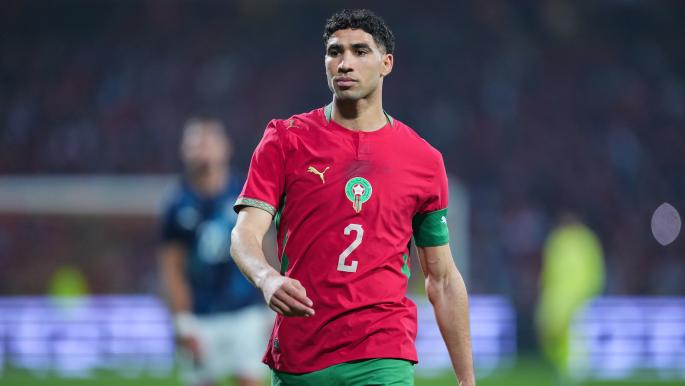
Moroccan player Achraf Hakimi revealed the reasons behind his decision to represent the Moroccan national team instead of Spain, noting that he did not feel comfortable with the Spanish team. This came during his appearance on an episode of the popular sports podcast "The Bridge," where he discussed his athletic career and the challenges he faced.
Hakimi, who currently plays for Paris Saint-Germain in France, spoke about his experience with the Spanish national team, explaining that he never felt a strong sense of belonging during his time with the squad. He emphasized that his choice to play for Morocco stemmed from a feeling of comfort and belonging to his home country, which made him feel proud.
Details of the Event
In the podcast, Hakimi shared the conversation with his teammates, Aurélien Tchouaméni and Kylian Mbappé, where they discussed various topics related to their professional lives. Hakimi mentioned that he had always wished to represent Morocco and found it an opportunity to express his cultural identity.
He also talked about the moments he experienced with the Moroccan national team, especially during the 2022 World Cup, where the team delivered an outstanding performance and displayed a high fighting spirit. He confirmed that those moments were among the most beautiful in his athletic career.
Background & Context
Historically, the relationship between Moroccan players and the Spanish national team has been complex, with Hakimi being one of the most prominent players facing these challenges. After growing up in Spain, Hakimi was part of the Real Madrid academy, which brought him closer to the Spanish national team.
However, many other Moroccan players, such as Hakim Ziyech, have also chosen to represent Morocco, reflecting a shift in identity and belonging among Moroccan players living abroad.
Impact & Consequences
Hakimi's choice to represent Morocco instead of Spain could significantly impact the future of the Moroccan national team, as he is considered a key player. This decision may encourage more Moroccan players to take similar steps, thereby strengthening the national team.
Moreover, this choice reflects the cultural and social changes occurring in Arab communities, where youth seek to express their cultural identity through sports.
Regional Significance
Hakimi's decision serves as a role model for many Arab youth aspiring to achieve their dreams in the world of sports. Choosing to represent Morocco highlights the importance of belonging and identity in the lives of athletes, enhancing national spirit in the region.
In conclusion, Hakimi remains a symbol of hope and ambition, proving that identity and belonging can be a driving force for success in the world of sports.