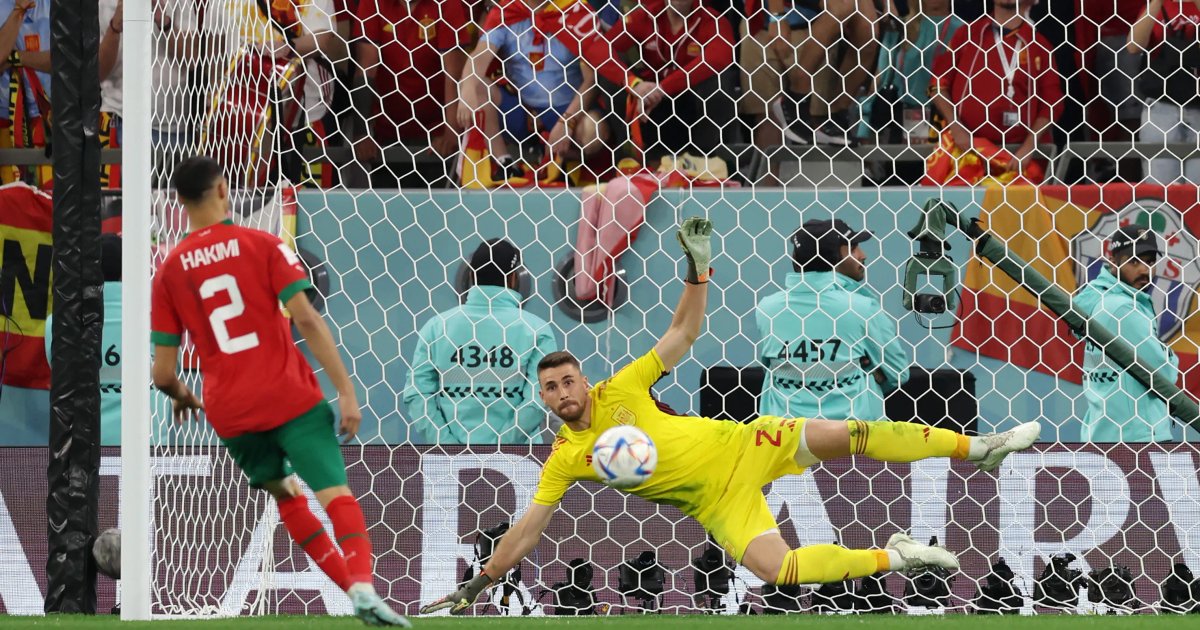
Moroccan player Achraf Hakimi shared his unique experience after joining the Moroccan national team, having trained with the Spanish team before making his final decision. He explained that this experience significantly impacted his football career.
In his remarks, Hakimi pointed out that he had the opportunity to train with the Spanish national team, which initially made him feel hesitant. However, his allegiance to his home country of Morocco had the greatest influence on his final decision.
Details of the Experience
Achraf Hakimi, considered one of the top defenders in the world, began his football career in Spain, where he played for Real Madrid before moving to Inter Milan in Italy. Nevertheless, his choice to play for the Moroccan national team was a significant decision for him, as he views it as an expression of his identity and belonging.
During his training with the Spanish national team, Hakimi gained valuable experiences, but he ultimately realized that he wanted to represent his home country. This decision reflects the challenges faced by migrant players in choosing to represent their native countries or the countries where they grew up.
Context and Background
Historically, global football has seen many similar cases where migrant players face tough choices between representing their native countries or the countries they have lived in. In Hakimi's case, he had a significant impact on the Moroccan national team, contributing to the team's qualification for the 2022 World Cup.
This phenomenon is part of the cultural and social changes occurring in the world of sports, where identity and belonging intertwine with athletic performance. Hakimi represents a new generation of players who take pride in their cultural heritage.
Impact and Consequences
The impact of Hakimi's decision on the Moroccan national team has been evident, as he has become one of the key players in the squad. This decision also reflects the importance of identity and belonging in the world of sports and how players can inspire the youth of their countries.
Furthermore, Hakimi serves as a role model for other players facing similar choices. His decision to represent Morocco reflects the strength of the familial and cultural ties that connect him to his homeland.
Significance for the Arab Region
Hakimi represents a symbol of hope and ambition in the Arab world, demonstrating how players from diverse backgrounds can achieve success on the international stage. His story inspires Arab youth in various fields, whether in sports or beyond.
In conclusion, Hakimi is a role model, showing how identity and belonging can play a pivotal role in a player's career. His story reflects the challenges and opportunities facing Arab youth in a changing world.