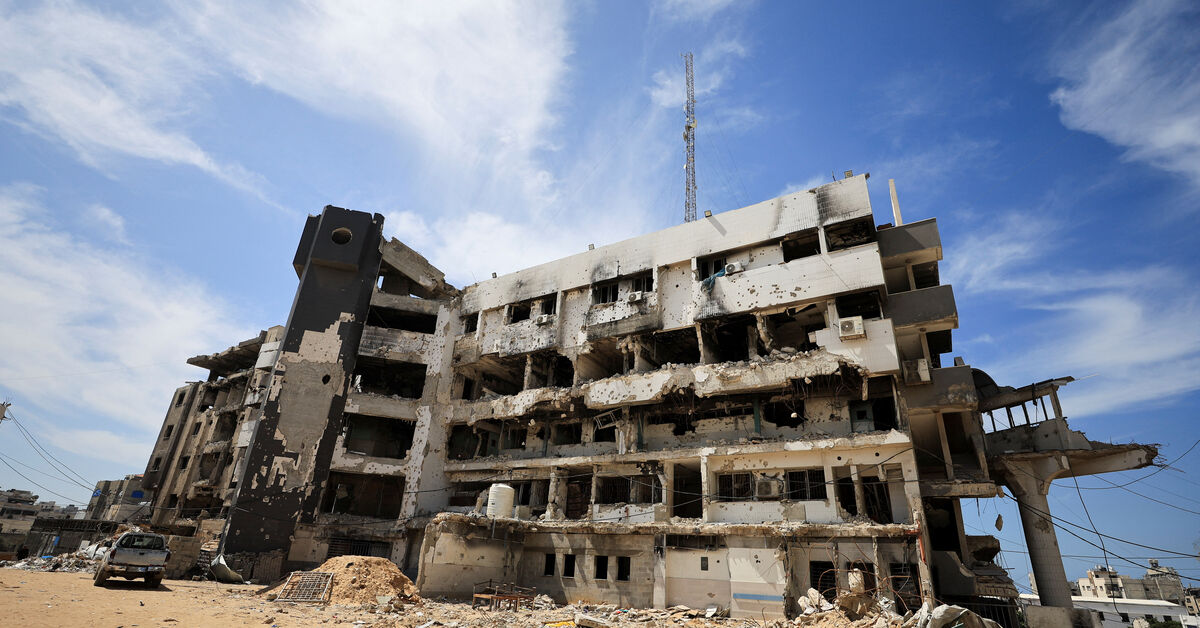
Hamas, the Palestinian military wing, has confirmed that it will not negotiate disarmament unless it obtains guarantees for a complete withdrawal of Israeli forces from the Gaza Strip. This position comes as part of efforts to implement the disarmament plan proposed by former U.S. President Donald Trump, which aims to achieve peace in the region.
The issue of disarmament is a sensitive topic in ongoing negotiations, representing a major point of contention in implementing Trump's plan, which seeks to end the ongoing conflict in Gaza. A ceasefire agreement was reached last October after two years of violent conflict, but significant challenges remain in achieving sustainable peace.
Details of the Situation
Sources indicate that Hamas insists on a complete withdrawal of Israeli forces from Gaza before it agrees to any steps related to disarmament. The movement has informed international mediators, who are seeking to make progress in the negotiations, that these guarantees are essential to ensure security and stability in the region.
Trump's plan, known as the "Peace Council," includes several provisions aimed at rebuilding Gaza and providing humanitarian aid, but it faces opposition from other Palestinian factions that believe this plan does not meet the basic rights of Palestinians.
Background & Context
Historically, the Gaza Strip has witnessed ongoing conflicts between Palestinian factions and Israel, with Hamas accusing Israel of conducting military operations against civilians. The conflict has resulted in the deaths of thousands of Palestinians and Israelis, complicating peace efforts. Since 2007, Hamas has controlled the Gaza Strip, while the Palestinian Authority governs the West Bank, leading to a Palestinian political divide.
In recent years, several countries, including Egypt and Qatar, have attempted to mediate talks between Hamas and Israel, but these discussions often stall due to disagreements over key issues such as disarmament and the right of return for Palestinian refugees.
Impact & Consequences
Hamas's refusal to disarm without guarantees could exacerbate the situation in Gaza, potentially reigniting hostilities if no progress is made in negotiations. This stance may also affect relations between Hamas and Arab countries that are seeking to support peace efforts in the region.
Furthermore, the continuation of tensions in Gaza could impact regional stability, as it may lead to an escalation of conflict in other areas, such as the West Bank or Lebanon, where other Palestinian factions exist.
Regional Significance
The Palestinian issue remains one of the central concerns in the Arab world, stirring strong emotions among Arab populations. Any escalation in Gaza could lead to widespread reactions in Arab countries, increasing pressure on governments to intervene or support the Palestinians.
Additionally, the ongoing conflict may affect relations between Arab states and Israel, especially in light of recent developments in the region, such as normalization agreements some Arab countries have signed with Israel. Ultimately, hope remains for achieving a just and comprehensive peace that guarantees the rights of Palestinians and leads to regional stability.