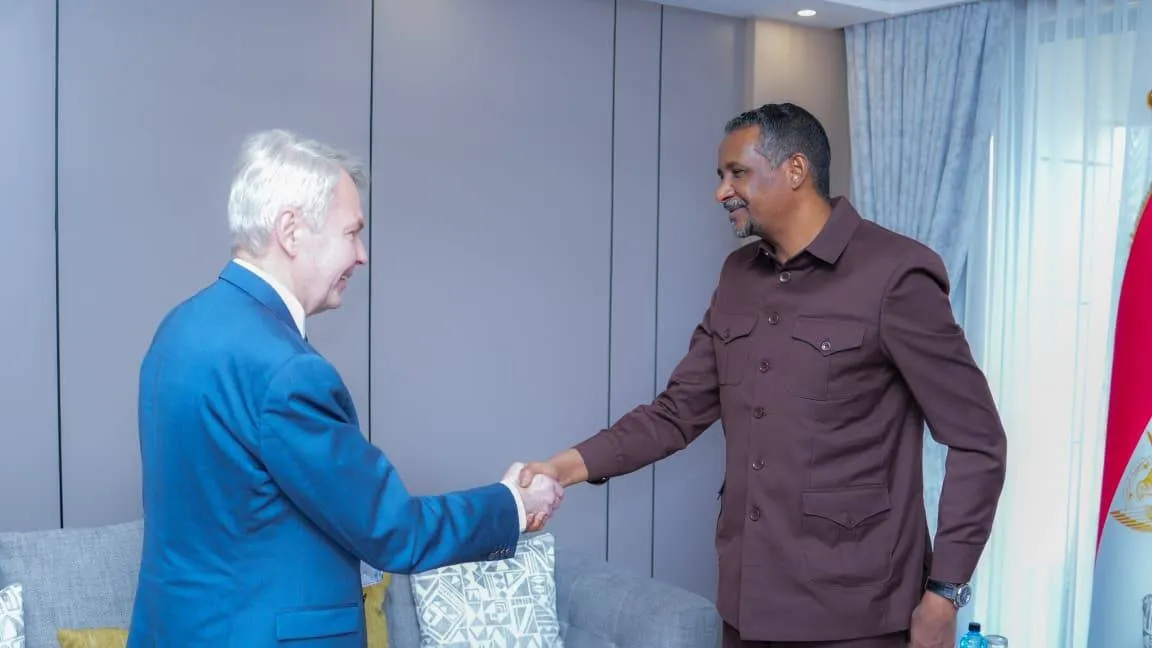
Mohamed Hamdan Dagalo, the leader of the Rapid Support Forces, known as Hamidti, confirmed his readiness to cooperate with the United Nations to stop the war in Sudan during a meeting with the UN Secretary-General's personal envoy, Pecca Haavisto, in the Kenyan capital, Nairobi. Hamidti expressed the necessity of delivering humanitarian aid to regions affected by the conflict, stressing the need for a transparent investigation into the violations faced by Sudanese citizens.
In his statement via his Facebook account, Hamidti noted that he discussed with Haavisto the political and security developments in Sudan, as well as the humanitarian situation and the efforts being made to achieve peace and stability. He confirmed that the “Tasees” government, based in Nyala, Darfur, is fully prepared to cooperate with the United Nations to provide the necessary assistance.
Details of the Meeting
During the meeting, Hamidti provided an explanation of the reasons behind the war ignited by the Muslim Brotherhood and their allies in the Sudanese army, emphasizing his government's commitment to the unity of the country and rejecting attempts to tear it apart. He also highlighted the importance of conducting investigations into the use of chemical weapons against Sudanese people, considering this a fundamental step towards achieving peace.
Hamidti reiterated his request to the United Nations to open offices in the areas controlled by the “Tasees” government in Darfur and Kordofan to provide humanitarian aid to civilians. For his part, UN envoy Haavisto affirmed the UN's efforts to end the war in Sudan and achieve peace, praising the response of the Rapid Support Forces leader to the meeting.
Background & Context
These developments come at a time when Sudan has been experiencing an ongoing war since April 2023, with escalating clashes between the Sudanese army and the Rapid Support Forces. This war has led to a deterioration of humanitarian conditions in the country, necessitating urgent international interventions.
Last week, Haavisto met with the Chairman of the Sovereignty Council, Abdel Fattah al-Burhan, in Khartoum, where they discussed international efforts to end the conflict. UN spokesperson Stefan Dujarric confirmed that all Sudanese parties met by the envoy expressed their willingness to cooperate with the United Nations.
Impact & Consequences
These meetings indicate the potential for tangible progress towards alleviating the suffering of Sudanese people. However, the situation on the ground remains complex, with renewed clashes between the Sudanese army and the Rapid Support Forces complicating peace efforts.
In the city of Delinj, clashes have escalated anew, as forces from the “Tasees” coalition attacked the city from multiple fronts, reflecting the ongoing armed conflict. These conditions underscore the urgent need for effective international interventions to end the conflict.
Regional Significance
The conflict in Sudan poses a significant challenge to security and stability in the Arab region. The continuation of the war could lead to negative repercussions for neighboring countries, including an influx of refugees and increased regional tensions.
Moreover, the deteriorating humanitarian conditions in Sudan call for an urgent response from the international community, as over 20 million people require immediate humanitarian assistance. The current situation demands a concerted international effort to ensure the rapid and safe delivery of humanitarian aid.
In conclusion, the hopes of the Sudanese people rest on international peace efforts, as it requires a collective endeavor to achieve stability in the country and end the suffering of the Sudanese people.