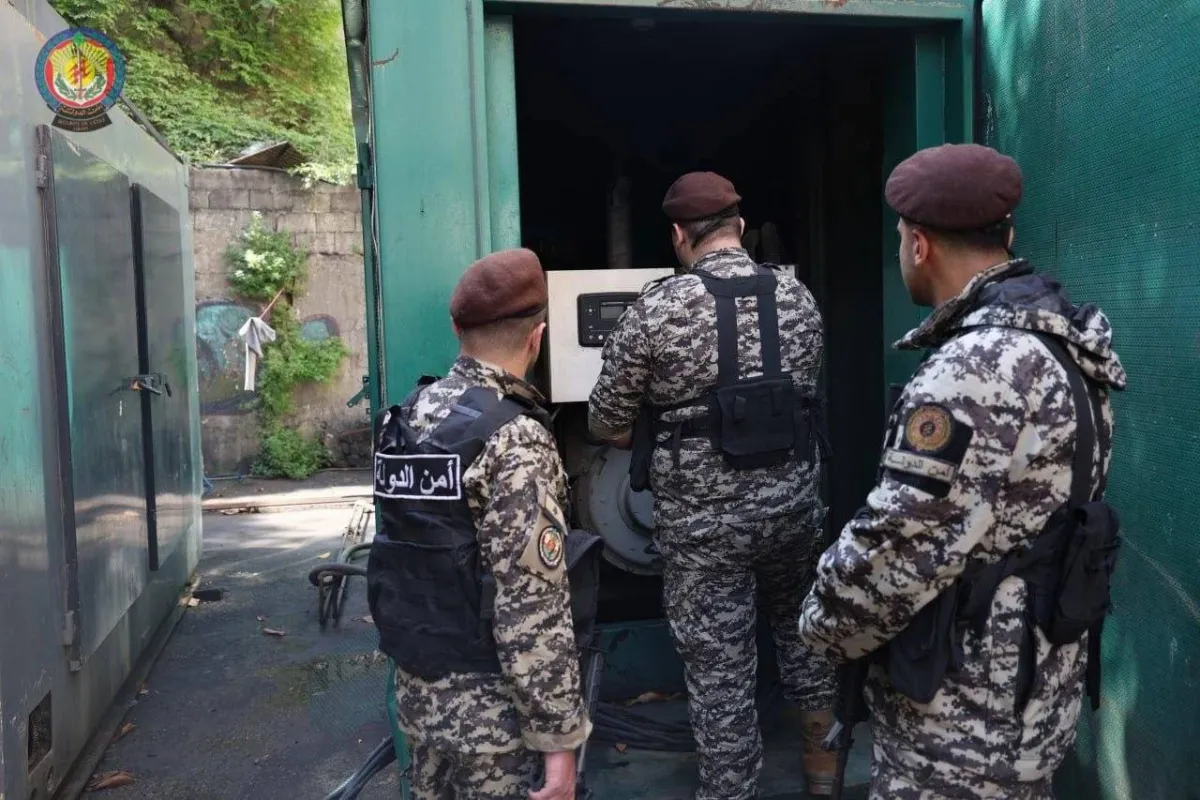
Beirut experienced heightened security tensions on Saturday afternoon due to clashes in the Saqiyeh al-Janzir area over generator pricing. These events led to injuries and the blocking of several roads in the capital, inciting a state of anger and protest among citizens.
The protests reignited after security forces raided one of the generator owners, leading to conflicting accounts between official sources and protesters. The National News Agency reported that protesters blocked the road in Verdun Square, using waste containers as barriers in response to the events in Saqiyeh al-Janzir.
Details of the Incident
Reports indicate that the clashes began when the State Security Agency intervened in the Saqiyeh al-Janzir area to confront a generator owner accused of raising prices. Security personnel fired shots into the air to disperse crowds that had gathered to protect the generator owner, resulting in injuries among civilians.
In reaction to these events, Prime Minister Nawaf Salam took to the platform 'X', holding one security agency responsible for the violence witnessed in the area. He emphasized the need for immediate investigations to clarify the circumstances of the incident, urging citizens to exercise restraint to maintain the capital's security.
Background & Context
These events occur amid a severe economic crisis plaguing Lebanon, where electricity generator prices have soared significantly, exacerbating tensions between citizens and generator owners. The country has recently witnessed numerous protests due to deteriorating economic conditions, reflecting widespread public discontent.
This incident highlights the increasing tensions between citizens and authorities, as many feel unprotected from the excesses of security agencies. These events have raised questions about how the government is handling the growing economic and social crises.
Impact & Consequences
These events serve as a wake-up call for the Lebanese government, reflecting the instability experienced by citizens. Such tensions may escalate protests, increasing pressure on a government already facing significant challenges in crisis management.
These incidents could affect the relationship between the government and citizens, as some may feel that the government is incapable of providing security or responding to their demands. This could worsen the situation in the country, especially given the difficult economic conditions.
Regional Significance
The events in Beirut are part of a broader picture of unrest occurring in many Arab countries, most of which are grappling with economic and social crises. These events may serve as a model for what could happen in other countries if crises are not effectively addressed.
Furthermore, the rising tensions in Lebanon could impact regional stability, as Lebanon serves as a point of contact between various regional powers. Therefore, any escalation in the situation could have repercussions for neighboring countries.
In conclusion, the recent events in Beirut underscore the urgent need to address economic and social crises effectively, as ongoing tensions could exacerbate the situation in the country and increase the suffering of citizens.