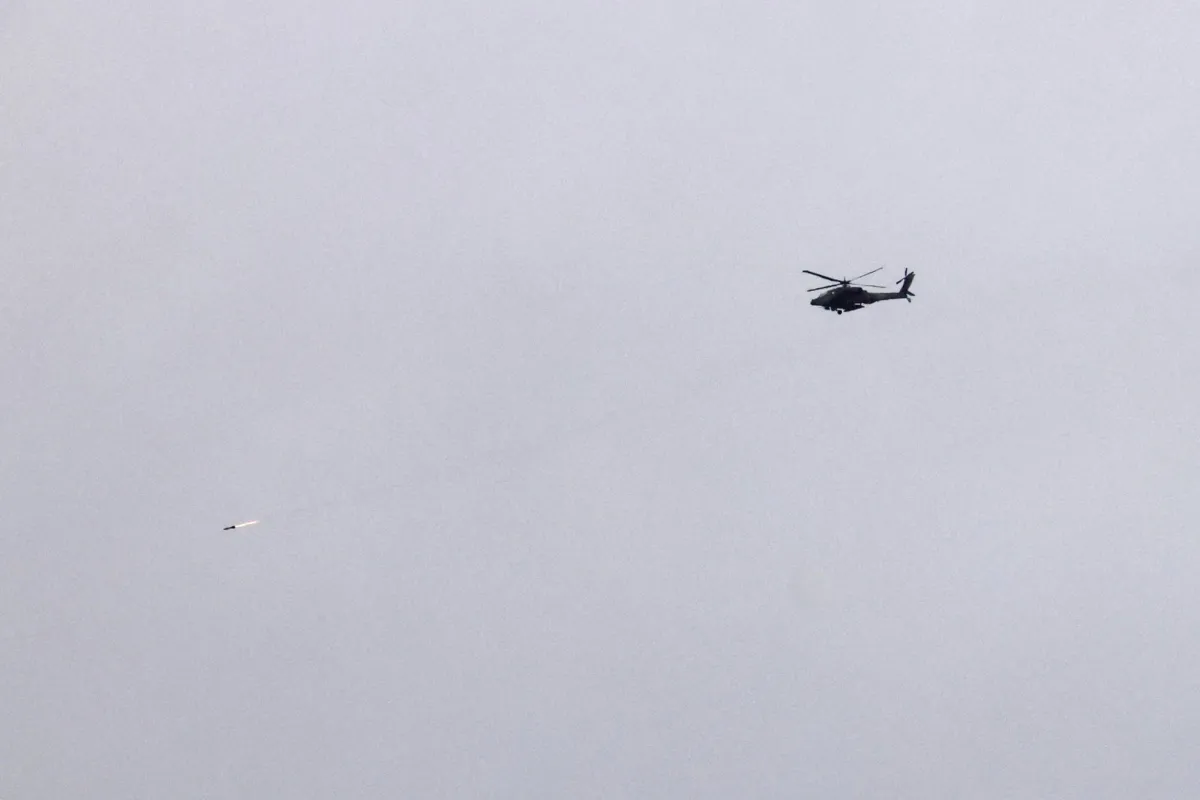
Hezbollah has recently announced the activation of surface-to-air missiles to target Israeli warplanes and drones. The party reported the downing of several drones in southern Lebanon, along with damage to an Israeli helicopter, indicating an escalation in military operations between the two sides.
This move comes at a time when experts suggest that these announcements aim to boost morale among the Lebanese public, as the party seeks to demonstrate its ability to counter Israeli air dominance, a claim considered unrealistic given Israel's air superiority.
Details of the Event
Hezbollah had previously used surface-to-air missiles in the last war in 2024, but it has recently intensified their use, recording five such operations last Wednesday. This raises questions about the type of missiles the party possesses and their potential to alter the course of battle, especially in light of Israeli air superiority, which is a decisive factor in favor of Tel Aviv.
Last week, the party announced it had targeted an Israeli warplane over Beirut using a surface-to-air missile, marking the first such operation over the capital. This raised concerns about the safety of civilian air traffic, as the launch occurred near Beirut International Airport.
Background & Context
Hezbollah's use of surface-to-air missiles is concentrated in the southern border region, where it aims to hit and down Israeli helicopters during troop evacuation operations. According to Dr. Riyad Kahwaji, a researcher in security and defense issues, these missiles are shoulder-fired and of the Misagh type, a modified model similar to the Russian Sam 7 missiles. The party has previously used them to down several drones.
Kahwaji points out that the party announces these operations to create an illusion among its audience that it possesses air defenses capable of countering Israeli aircraft, despite the fact that the maximum capability of these missiles is limited to targeting only some drones, given the superiority of Israeli aircraft that can bypass advanced air defense systems like the Russian S300.
Impact & Consequences
The Misagh 2 missiles are relatively modern and effective against low-flying targets, as they track the heat of the aircraft or helicopter engine. Meanwhile, the Russian S300 system is one of the strongest long-range air defense systems, highlighting the significant gap in military capabilities between Hezbollah and Israel.
At the same time, Israeli airstrikes on areas in southern Lebanon continued, resulting in the deaths of four people and injuries to three others in an airstrike on the town of Al-Ramadiyah. The Lebanese Ministry of Health has reported an increase in the death toll to 1,318 since the war began, reflecting the escalating violence in the region.
Regional Significance
Concerns are growing over rising tensions in Lebanon and their impact on regional stability. The military escalation between Hezbollah and Israel could have serious repercussions for neighboring countries, especially given the presence of over one million displaced Lebanese due to Israeli airstrikes.
In this tense atmosphere, the international community must act to halt the escalation and ensure the protection of civilians, as the continuation of the conflict could threaten regional security and increase the suffering of the Lebanese people.