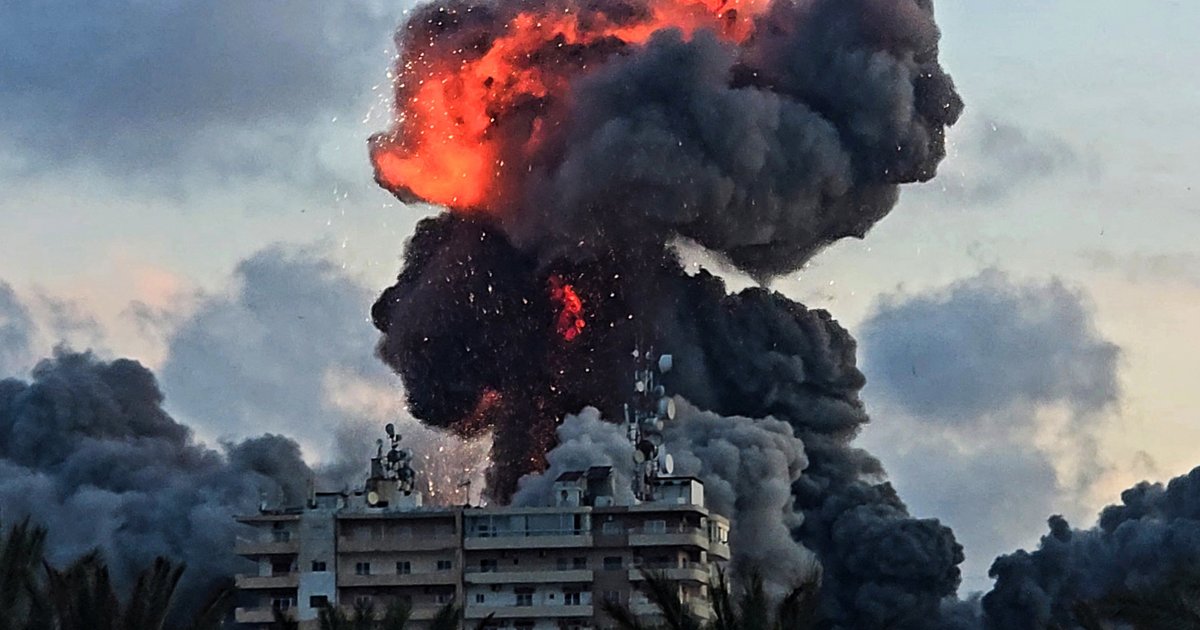
In a new military escalation, Lebanon's Hezbollah has declared that it has launched a series of attacks on Israeli forces advancing in southern Lebanon. According to reports from the National News Agency of Lebanon, the attacks targeted military vehicles and a Merkava tank, as well as a building believed to house the "secret command for armed vehicles" in several areas where Israeli forces have been stationed.
At the same time, Lebanese medical rescue teams reported that an Israeli airstrike targeted a residential apartment in the Qiyam area of Sidon, resulting in the deaths of three individuals and injuries to five others. This escalation comes at a time when the region is witnessing increasing tensions, as Israeli forces have intensified their attacks on Lebanon in recent days.
Details of the Incident
Hezbollah clarified that the attacks it carried out were a response to the Israeli advance, targeting military vehicles and a tank, reflecting an escalation in the ongoing conflict between the two sides. These attacks were executed in multiple areas, indicating a high level of coordination among Hezbollah units.
On the other hand, reports indicated that the Israeli airstrike on Sidon targeted a civilian area, raising questions about the targeting of civilians in this conflict. Many observers condemned these attacks, noting that the military escalation could exacerbate the humanitarian situation in the region.
Background & Context
Historically, the Lebanese-Israeli border has witnessed ongoing tensions, especially following the 2006 war that led to widespread destruction in Lebanon. Since then, Hezbollah has continued to enhance its military capabilities, making it a key player in the conflict with Israel. With rising tensions in the region, it has become clear that any military escalation could lead to serious ramifications for regional security.
In recent years, the region has experienced radical changes in political and military alliances, complicating the situation further. Regional and international interests overlap in this conflict, making it difficult to reach a lasting resolution.
Impact & Consequences
The recent escalation between Hezbollah and Israel could have serious implications for regional security. As attacks increase, the situation may head towards a full-scale war, directly affecting civilians in both Lebanon and Israel. Furthermore, these events could lead to new international interventions, as major powers seek to maintain stability in the region.
Moreover, the military escalation could impact the Lebanese economy, which is already suffering from multiple crises. The ongoing conflict may worsen the humanitarian situation, increasing the suffering of civilian populations in Lebanon.
Regional Significance
This escalation between Hezbollah and Israel does not only affect Lebanon but also extends its impact to other Arab countries. It may lead to increased tensions in countries like Syria and Palestine, which are grappling with internal and external conflicts. Any military escalation could open the door to new regional and international interventions, further complicating the situation in the area.
In conclusion, the situation in Lebanon and Israel remains tense, with the possibility of further escalation in the coming days. It is crucial for Arab countries to closely monitor the situation and seek diplomatic solutions to avoid further escalation.