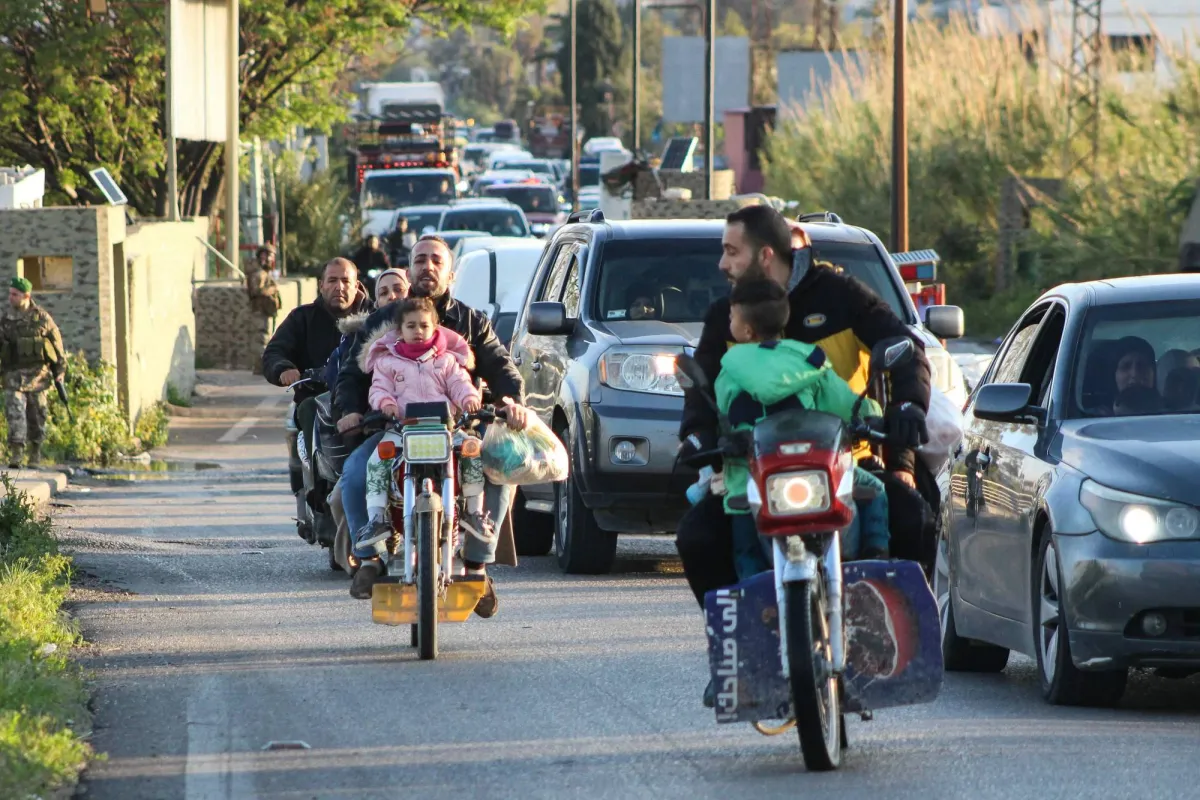
Lebanese sources close to Hezbollah informed Reuters that the group has halted its fire on northern Israel and on Israeli forces in Lebanon during the early hours of Wednesday. This decision comes as part of a ceasefire agreement that was announced between the United States and Iran earlier.
In contrast, Israel continued its airstrikes on southern Lebanon, issuing new evacuation warnings for the city of Tyre, indicating that it will launch an attack there soon. Israeli Prime Minister Benjamin Netanyahu confirmed that the ceasefire between Iran and the United States would not include Lebanon, complicating the security situation in the region further.
Details of the Event
The three sources confirmed that Hezbollah, which is backed by Iran, is expected to issue a statement outlining its official position on the ceasefire, especially after Netanyahu's assertion that Lebanon is not included in this agreement. This morning, the Israeli army launched several airstrikes on southern Lebanon, according to the official National News Agency, and issued a new order for evacuating areas in the city of Tyre.
The Lebanese army also urged residents of southern Lebanon to "exercise caution" in returning to their homes due to the ongoing Israeli strikes. In a related context, armed Iraqi factions announced early today that they are suspending their operations in Iraq and the region, indicating that the halt will last for two weeks.
Background & Context
Over the past few days, Iraqi factions have carried out hundreds of drone and missile attacks targeting American sites in Iraq and the region, including the Victoria base at Baghdad International Airport and Erbil Airport. These operations are part of the reactions to the escalating tensions between Iran and the United States.
On another note, the Lebanese Ministry of Health reported that at least eight people were killed in an Israeli airstrike targeting the city of Sidon, highlighting the devastating impact of the conflict on civilians. The ministry confirmed that the strike also resulted in 22 injuries, reflecting the rising violence in the region.
Impact & Consequences
Recent events underscore the escalating tensions in the region, with Lebanon becoming a new battleground for regional powers. The repeated Israeli airstrikes on Lebanon indicate that the security situation remains fragile, with civilians bearing the brunt of the conflict.
The suspension of operations by Iraqi factions may also impact regional dynamics, as regional players may seek to reassess their strategies in light of the current changes. Continued fighting in Lebanon could exacerbate humanitarian conditions and increase the suffering of local populations.
Regional Significance
The recent developments in Lebanon are particularly significant for Arab countries, as they reflect the ongoing conflicts in the region and their impact on security and stability. The escalation of violence in Lebanon could lead to broader repercussions, including an influx of refugees and increased tensions among neighboring countries.
In conclusion, the situation in Lebanon remains under close observation, with analysts expecting that upcoming developments will lead to changes in the regional landscape. The need for dialogue and negotiation remains urgent to avoid further escalation.