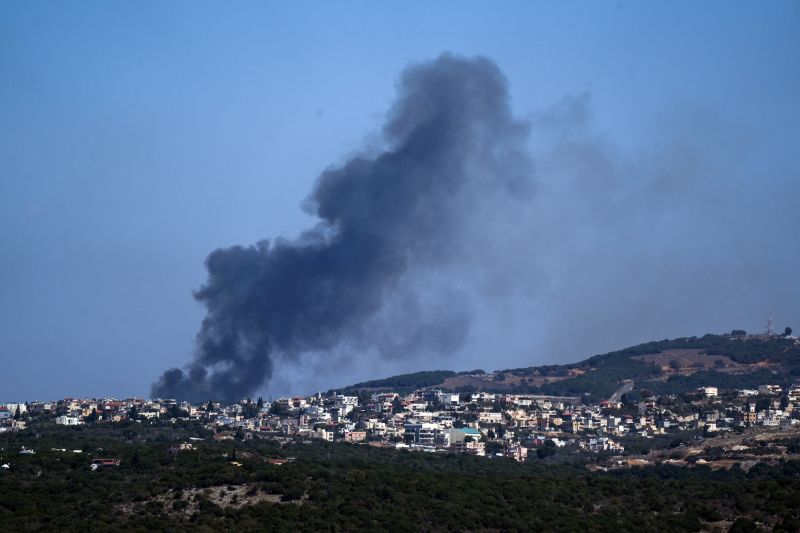
Hezbollah, the Lebanese militant group, has today targeted Israeli military vehicles along the Lebanese border using a ground-to-air missile. This attack is part of the escalating tensions between the two sides and reflects the volatile security situation in the region.
The incident, which occurred in the border area, targeted an Israeli helicopter, demonstrating Hezbollah's capability to conduct advanced military operations. Military sources confirmed that the attack resulted in damage to the targeted vehicles, although specific details regarding human casualties have not been disclosed.
Details of the Incident
This operation is part of a series of reciprocal attacks between Hezbollah and Israel, as each side seeks to enhance its military position on the ground. Reports have indicated that Hezbollah utilized advanced missiles in this attack, raising concerns about its growing military capabilities.
At the same time, Israel responded to this attack by bombarding Hezbollah positions in Lebanon, further increasing tensions between the two parties. This escalation comes at a sensitive time, as fears of an all-out war in the region are rising.
Background & Context
Historically, the Lebanese-Israeli border has witnessed recurring tensions, with Hezbollah being one of the most prominent armed factions in Lebanon, claiming to defend Lebanon's sovereignty against Israeli aggression. Since the 2006 war, relations between the two sides have seen a continuous escalation, marked by exchanges of attacks and threats.
It is noteworthy that Hezbollah has received military and logistical support from Iran, which enhances its military capabilities. This support complicates Israel's ability to achieve its security objectives in the region and adds to the complexity of the security situation.
Impact & Consequences
The recent attack could lead to a larger military escalation, as Israel is likely to launch airstrikes on Hezbollah positions in Lebanon. This escalation may have serious repercussions for civilians on both sides and increase the suffering of local populations.
Furthermore, this escalation could affect regional stability, as regional and international powers may intervene to resolve the conflict. Major countries are expected to closely monitor the situation, especially amid rising tensions in the area.
Regional Significance
The recent events along the Lebanese-Israeli border signal a rise in tensions in the region, which could impact stability in neighboring countries. Amid the political and economic crises faced by many Arab nations, escalating the conflict may exacerbate humanitarian conditions.
These events may also affect relations between Arab countries and Israel, as there may be increasing pressure on Arab governments to intervene or take clear stances regarding the conflict. Under these circumstances, there remains hope that the international community can mediate a peaceful resolution to the dispute.