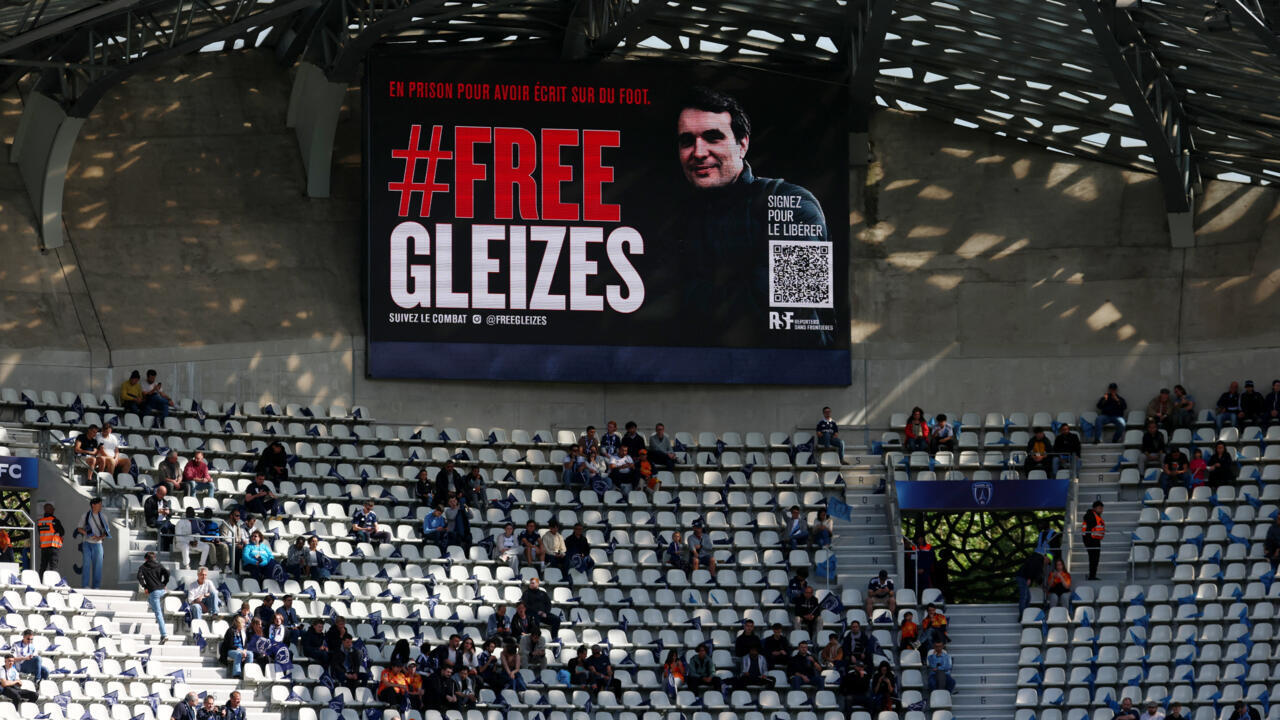
Today, the focus is on the French Cup final, which will bring together RC Lens from northern France and OGC Nice from the southeast. This match will carry a political and symbolic weight as part of a campaign by Reporters Without Borders and the French Football Federation to demand the release of journalist Christophe Gleize, who has been imprisoned in El Khliâa near Algiers for over a year.
Christophe Gleize, aged 37, was arrested by Algerian security in May 2024 in Tizi Ouzou while attempting to report on the CR Belouizdad football club. Initially placed under judicial supervision, he was sentenced to seven years in prison in June 2025 on charges of "glorifying terrorism" amid a diplomatic crisis between France and Algeria.
Event Details
Before the match kicks off, over 800 scarves bearing the name "Christophe Gleize" will be distributed in the official stand and to the attending journalists at the Stade de France. The match commentator will publicly mention the number of days Gleize has been detained, ensuring that his case remains in the public eye. In a symbolic gesture, Gleize's parents will be honored with the privilege of starting the match.
Thibaut Proutan, the General Director of Reporters Without Borders, expressed pride in transforming the French Cup final into a platform to raise public awareness about the detained journalist's case, emphasizing that football can be an effective means of defending press freedom. He also praised the unwavering commitment of the French Football Federation since the beginning of the case.
Background & Context
These events come at a sensitive time for French-Algerian relations, which have seen rising tensions in recent years. Gleize is one of the journalists who have faced detention in the context of freedom of expression issues in Algeria, highlighting the challenges journalists face in the region. His family has continuously appealed to Algerian President Abdelmadjid Tebboune for a presidential pardon in an attempt to end his suffering.
The ruling against Gleize has sparked widespread reactions in media and political circles, with many viewing it as an expression of the repression of press freedom in Algeria. The ruling was upheld during the appeal process in early December 2025, increasing pressure on the Algerian government.
Impact & Consequences
The case of Christophe Gleize is not just an individual issue; it reflects the reality of press freedom in Algeria. Protests and appeals for his release could lead to changes in policies regarding journalists in the country. This case may also contribute to enhancing the dialogue about freedom of expression in the Arab world, especially amid the political and social crises many countries are experiencing.
International engagement with Gleize's case could also help improve Algeria's image on the global stage, as the Algerian government seeks to strengthen its relations with Western nations. Releasing Gleize could be a positive step towards improving these relations.
Regional Significance
The case of Christophe Gleize exemplifies the challenges faced by journalists in the Arab world, where incidents of detention and repression are increasing. This case may inspire journalists in other countries to continue their struggle for freedom of expression and foster a spirit of solidarity among journalists in the region.
In conclusion, the French Cup final today is not just a football match; it is an occasion to highlight the issue of press freedom and to affirm that sports can be a platform for social and political change.