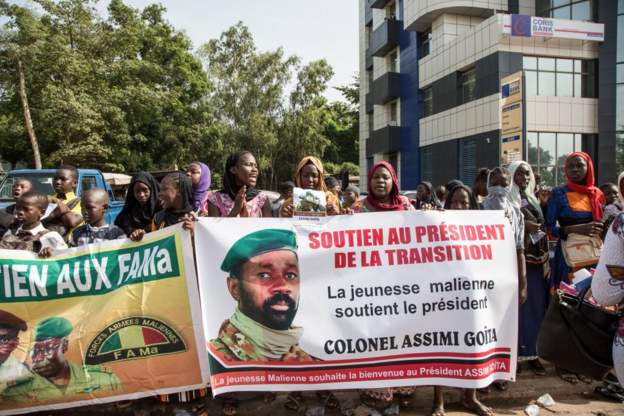
Malian military council leader, Assimi Goita, has reappeared after a three-day absence to confirm that the situation in the country is extremely serious. This statement follows a series of unprecedented attacks by armed groups on strategic sites, leaving the authorities in a very weak position.
In his first speech since the attacks, Goita acknowledged that the situation is under control but warned against division that could threaten the country's stability. He called on citizens to avoid succumbing to panic, stressing the importance of calm during these difficult times.
Details of the Incident
Goita, who returned to the public eye after attacks carried out by the Jama'a Nusrat al-Islam wal-Muslimin allied with Tuareg separatists, indicated that security measures have been intensified. He confirmed that operations for sweeping, intelligence gathering, and securing areas are ongoing, reflecting the government's efforts to confront security challenges.
During his appearance, Goita also showcased images of himself meeting with the Russian ambassador to Mali, Igor Grumiko, where they discussed the partnership between Bamako and Moscow in combating terrorism. This comes at a time when concerns are rising about the government's ability to control the security situation following the death of Defense Minister Sadio Kamara during the attacks.
Background & Context
Historically, Mali has faced armed conflicts since 2012 when a coalition of jihadist groups and separatists took control of the northern part of the country. This conflict has revived memories of previous crises, with ongoing confrontations between Malian forces and armed groups.
The recent attacks, described as the most violent in 15 years, resulted in the deaths of at least 23 individuals, including civilians and military personnel. These attacks targeted the Kati camp, which is the second-largest military stronghold after Bamako, raising further concerns about security in the capital.
Impact & Consequences
The repercussions of these events could be severe for Mali's stability, as fears of escalating violence and deteriorating humanitarian conditions have increased. The threat from the Jama'a Nusrat al-Islam wal-Muslimin to impose a blockade on Bamako reflects the magnitude of the challenges facing the government.
In light of these circumstances, the U.S. Embassy in Bamako issued warnings to its citizens, urging them to avoid unnecessary travel. These warnings reflect the growing international concern regarding the security situation in the country.
Regional Significance
The situation in Mali has implications for regional security, as it could affect the stability of neighboring countries. The rise in terrorist activity in West Africa raises alarms among Arab nations, especially with existing links between armed groups in the region.
In conclusion, the situation in Mali remains under close observation, with increasing fears of worsening security and humanitarian crises. A response from the international community is required to support the government's efforts in restoring security and stability.