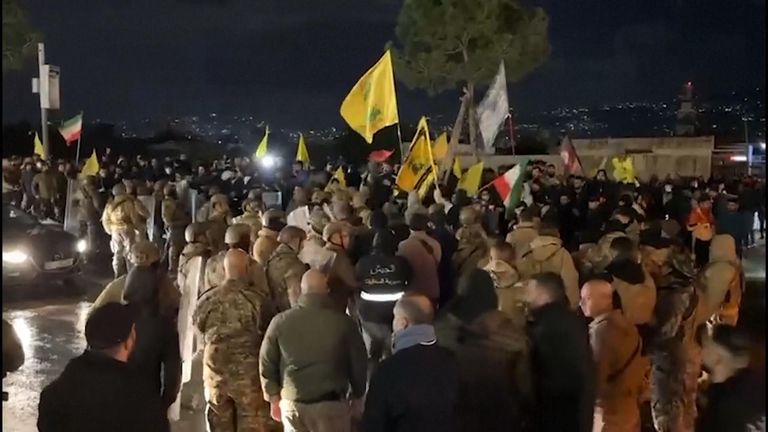
The United Nations peacekeeping forces in Lebanon, known as UNIFIL, face significant challenges following the deaths of three Indonesian soldiers. This incident comes at a sensitive time, as UNIFIL was supposed to play a vital role in maintaining security between Hezbollah and the Israeli army.
Despite the presence of these forces since 1978, they have failed to achieve their outlined objectives and have sometimes become targets of attacks. The recent incident that resulted in the deaths of the Indonesian soldiers highlights the increasing risks faced by these forces in a region plagued by ongoing tensions.
Details of the Incident
In recent days, a UNIFIL patrol was attacked, resulting in the deaths of three Indonesian soldiers, raising widespread concern about the safety of international forces in Lebanon. The incident occurred at a time when UNIFIL was preparing to conclude its mission, complicating the security situation in the region.
Preliminary investigations suggest that the attack may be linked to the escalating tensions between Hezbollah and the Israeli army, as international forces strive to maintain stability in southern Lebanon. However, UNIFIL's failure to prevent military escalation between the two parties raises questions about its effectiveness and ability to carry out its mission.
Background & Context
UNIFIL was established in 1978 following the Israeli-Lebanese conflict, aimed at promoting peace and security in the region. Over time, its mandates have expanded to include monitoring ceasefires and providing humanitarian support. However, despite the efforts made, the security situation in Lebanon remains fragile, with increasing military activities by Hezbollah complicating UNIFIL's mission.
Historically, the region has witnessed numerous armed conflicts, affecting the ability of international forces to operate effectively. Additionally, internal political divisions in Lebanon complicate UNIFIL's mission, as opinions vary regarding its role and significance.
Impact & Consequences
The deaths of the Indonesian soldiers could have serious repercussions for the future of UNIFIL. With increasing risks, international forces may face greater pressure from contributing countries, potentially leading to a reassessment of their role in Lebanon. This incident may also enhance the sense of distrust among local populations towards international forces, impacting their ability to operate effectively.
Furthermore, this incident could escalate tensions between Hezbollah and Israel, increasing the likelihood of a new armed conflict in the region. This, in turn, could affect regional stability and exacerbate the suffering of civilians in Lebanon.
Regional Significance
UNIFIL is part of international efforts to maintain peace in a region suffering from ongoing conflicts. Therefore, any decline in its effectiveness could negatively impact regional security. Given the current tensions between major powers in the Middle East, UNIFIL's failure to fulfill its mission could worsen humanitarian and political crises in the region.
In conclusion, the incident involving the deaths of the Indonesian soldiers underscores the urgent need to reassess UNIFIL's role in Lebanon and to identify new strategies to enhance security and stability in the region. The current situation requires greater international cooperation to ensure the safety of international forces and achieve the desired peacekeeping objectives.