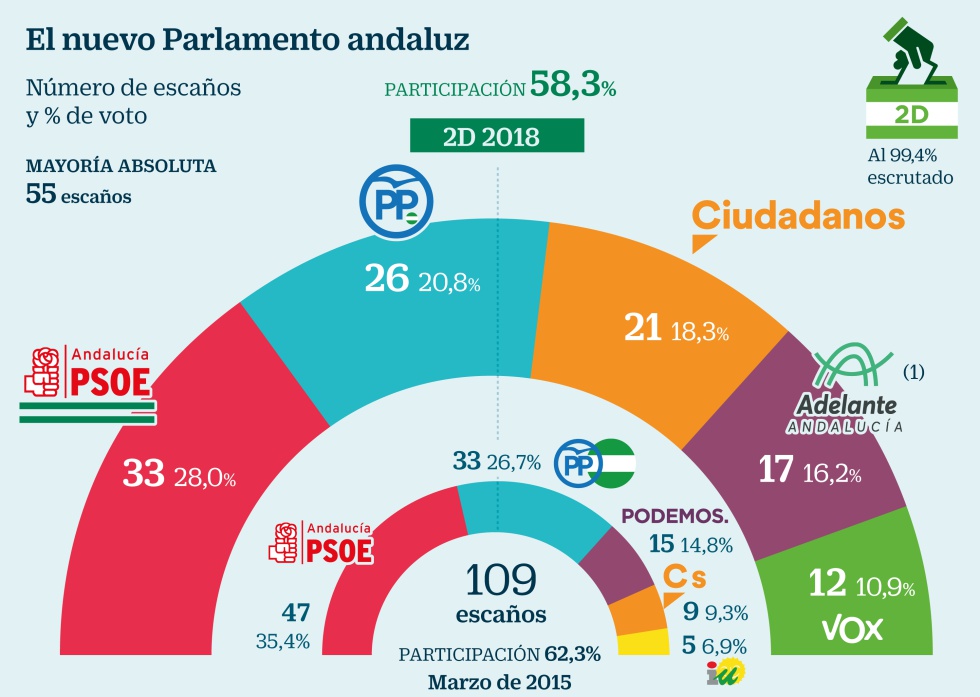
The Moreno Party achieved a notable increase of 9.2% in votes during the recent local elections, marking its highest historical voting percentage. Despite this achievement, the party faced significant challenges due to the notable rise in participation led by the Andalusian left, which adversely affected its chances of securing a majority.
This election is considered a turning point in the Andalusian political landscape, as the results showed that voters were more enthusiastic about participating, reflecting an increase in political awareness among citizens. The intensive electoral campaign conducted by the Moreno Party helped attract more voters, but it was not sufficient to overcome the challenges posed by the left.
Details of the Event
The elections took place in a highly competitive atmosphere, witnessing a struggle between traditional and leftist parties in the Andalusian political arena. The results indicated that the Moreno Party managed to attract a large number of new voters, reflecting the success of its electoral strategies. However, the increase in participation from the Andalusian left was a decisive factor influencing the election outcomes.
It is noteworthy that the Moreno Party launched an electoral campaign focused on social and economic issues that matter to citizens, which contributed to its relative success. Nevertheless, the challenges it faced from leftist parties were significant, leading to the failure to achieve the required majority.
Background & Context
Historically, Andalusia has witnessed significant political transformations, with leftist parties playing an important role in shaping local policies. Economic and social crises have bolstered the position of these parties, making them more capable of attracting voters. In recent years, Andalusia has seen an increase in political awareness, leading to a higher voter turnout in elections.
This election is part of a series of elections that Spain has experienced, where parties compete to strengthen their positions in local government. This competition reflects the changing political dynamics in the country, as each party seeks to achieve its electoral goals.
Impact & Consequences
The results of this election could significantly impact the Andalusian political landscape, potentially leading to a reshaping of political alliances. The increase in voter participation reflects a growing political awareness among voters, which may influence party strategies in the future.
It is also important to note that these results may encourage other parties to reassess their electoral strategies, potentially leading to changes in local policies. Additionally, the Moreno Party's success in attracting new voters may strengthen its position in upcoming elections.
Regional Significance
This election serves as an example of how political awareness and active participation can shape local policies. The lessons learned from this experience could be beneficial for many Arab countries seeking to enhance political participation among their citizens. Furthermore, increased political awareness may contribute to improving governance quality and strengthening democracy in the region.
In conclusion, the results of the Andalusian elections reflect the dynamic changes in the political landscape and highlight the importance of active voter participation in shaping their political future.