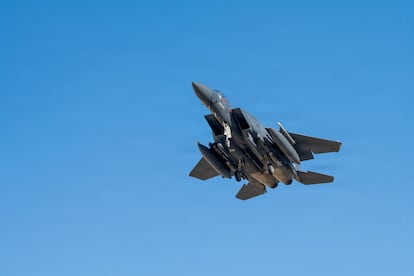
The Trump administration intends to submit a request to the U.S. Congress for a defense budget of around $1.5 trillion, representing a 40% increase from the current budget. This move comes at a sensitive time as U.S.-Iran relations are experiencing military escalation, raising concerns about government spending priorities amid the social and economic challenges facing the country.
The proposed budget also includes 10% cuts to other department budgets, alongside the cancellation of programs related to combating climate change, housing, and education. These moves have sparked widespread debate about how financial resources should be allocated in light of the multiple crises affecting American families.
Details of the Proposal
The proposal was submitted as part of the overall government budget sent to Congress, where Trump emphasized during a special event that military spending should be prioritized, indicating that the United States is at war, making it difficult to allocate funds for social programs such as childcare and healthcare.
The budget also includes a pay raise for military personnel ranging from 5% to 7%, in addition to investments aimed at bolstering the military industrial base and increasing the production of munitions and military equipment. A portion of the budget has also been allocated for the Iron Dome project, a missile defense system designed to protect U.S. territory.
Background & Context
Historically, the U.S. defense budget has undergone significant changes based on political and strategic trends. In recent years, the United States has seen a notable increase in military spending, particularly with rising tensions in the Middle East. This increase comes at a time when concerns about new threats are growing, including from Iran, which Washington considers one of the greatest threats to regional security.
Moreover, the proposed budget reflects the current administration's trend towards enhancing military power as a means of ensuring national security, which contrasts with the growing calls within the U.S. to focus on social and economic issues.
Impact & Consequences
An increase in the defense budget could lead to a reduction in resources allocated for social programs, raising concerns among many Americans who are suffering from the impacts of economic crises. Furthermore, this step may escalate tensions with other countries, especially in the Middle East, where Iran is considered a key player.
Economic analysis suggests that a focus on military spending may negatively impact long-term economic growth, as funds are diverted from vital sectors such as education and healthcare to the military sector.
Regional Significance
In the Arab region, this increase in U.S. military spending could exacerbate security situations, especially amid ongoing conflicts. Arab countries affected by tensions between the U.S. and Iran may find themselves in a difficult position, as any military escalation could impact the stability of the entire region.
In conclusion, this proposed budget reflects the priorities of the current U.S. administration, which places military security at the forefront of its concerns, raising questions about how this will affect social and economic issues domestically and the situation in the Arab region.