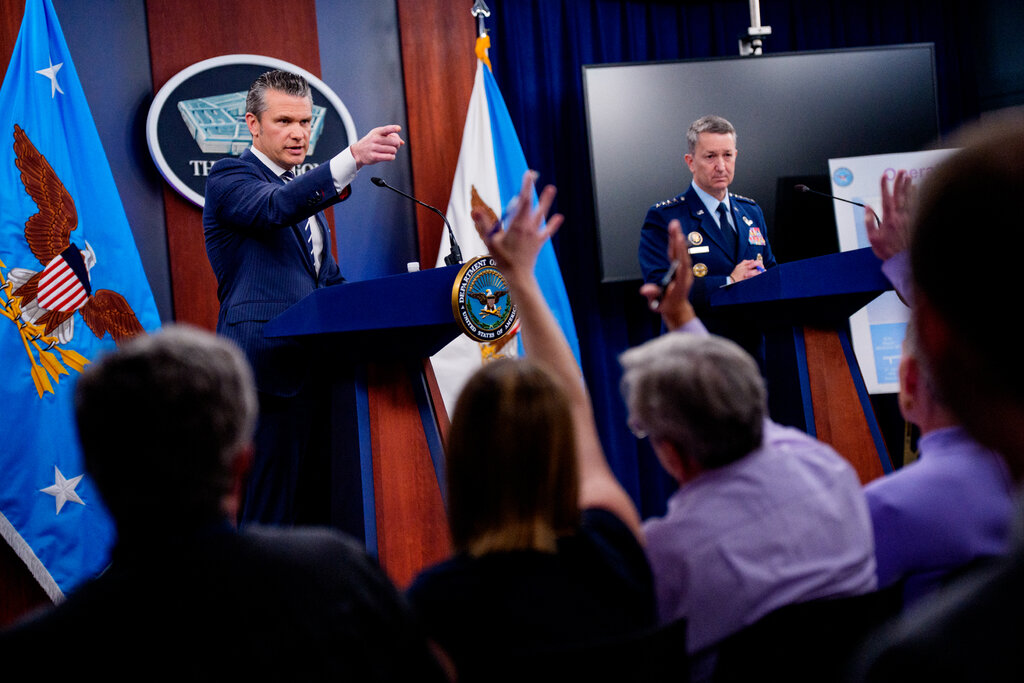
In an unexpected move, U.S. Defense Secretary Pete Hegseth declared a historic victory in the war fought by the United States and Israel against Iran during a press conference held on Wednesday. This announcement came just one day after a two-week ceasefire agreement was reached between Washington and Tehran, prompting questions about the future of relations between the two countries.
Hegseth confirmed that the military operation, dubbed Operation Epic Fury, was a resounding success on the battlefield, indicating that this achievement reflects the military strength and close cooperation between the United States and Israel. The announcement received mixed reactions from observers and military analysts.
Details of the Ceasefire Agreement
These developments come at a sensitive time, as relations between the United States and Iran have experienced significant tension over the past years. Hegseth pointed out that the recent ceasefire agreement represents an opportunity to ease tensions, although many observers believe the situation remains fragile.
He also clarified that the military operation had achieved strategic objectives, bolstering the United States' position in the region. However, the question remains whether this ceasefire will lead to lasting changes in the relations between the two nations.
Background & Context
Historically, U.S.-Iranian relations have been strained since the Islamic Revolution in 1979. These relations have seen notable escalation in recent years, especially with the U.S. withdrawal from the nuclear agreement in 2018. These steps have led to increased military tensions, with the United States enhancing its military presence in the region.
In this context, Hegseth's announcement of victory in the war against Iran is a significant step, reflecting geopolitical shifts in the region. The ceasefire agreement may also open the door to new negotiations, although doubts remain regarding Iran's intentions.
Impact & Consequences
These developments carry significant implications at both regional and international levels. The success of the United States and Israel in achieving their military objectives could alter the balance of power in the region, potentially affecting other conflicts such as those in Syria and Yemen.
Furthermore, the ceasefire may provide an opportunity for diplomatic efforts, but it could also strengthen the position of hardliners in Iran who may view this as a sign of weakness. Thus, challenges remain in achieving lasting peace in the region.
Regional Significance
This announcement represents a shift in international relations and reflects ongoing tensions in the Middle East. The evolving dynamics between the U.S. and Iran could set the stage for future conflicts or collaborations, depending on how both nations navigate the aftermath of this ceasefire.
As the situation unfolds, the international community will be closely monitoring the developments, particularly regarding Iran's response and the potential for renewed diplomatic engagement.