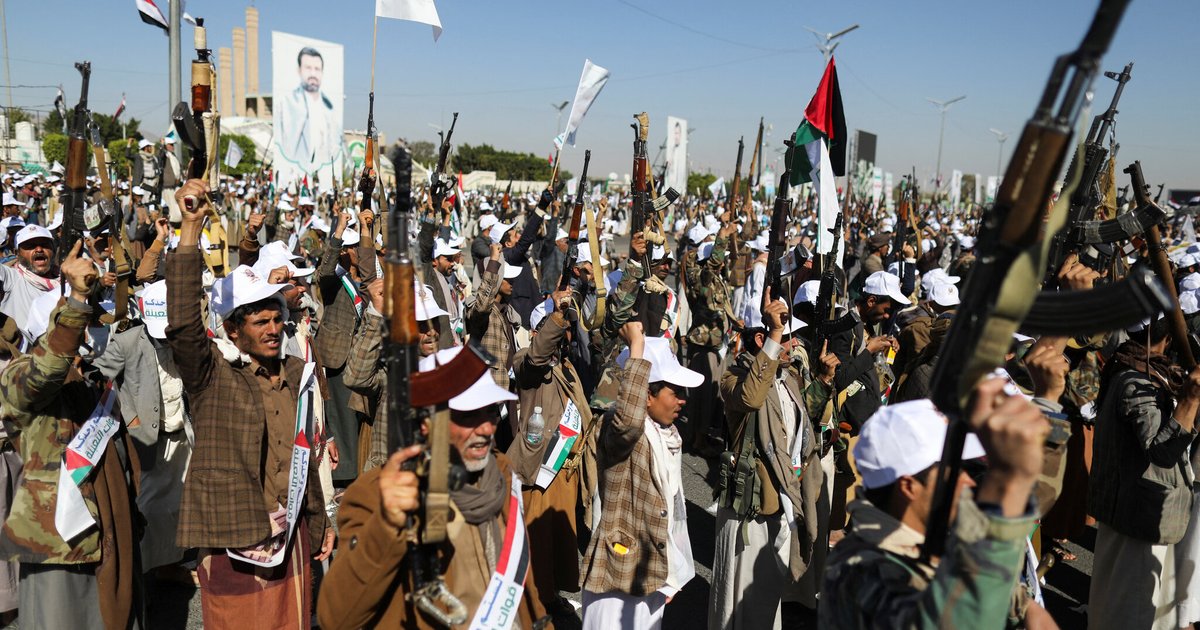
The Houthi group (Ansar Allah) in Yemen confirmed on Tuesday that their war will continue without interruption across generations, in reaction to statements made by U.S. President Donald Trump, who indicated that the conflict in the region would see a near end and that the Strait of Hormuz would reopen.
In a post on the platform X, Hizam Al-Asad, a member of the group's political bureau, stated: "Where is the escape? We are still at the beginning of it," reflecting the group's steadfast position on the continuation of fighting under the current circumstances.
Details of the Event
The Houthi statements came days after Trump mentioned ongoing diplomatic efforts to end the conflict in Yemen, raising questions about the seriousness of these remarks amid the continued military operations on the ground. The Houthis, who control the capital Sana'a and large parts of northern Yemen, consider the war as part of a broader struggle concerning sovereignty and influence in the region.
These statements coincide with rising tensions in the Middle East, where the situation in Yemen remains complex, and the Yemeni people are suffering from severe humanitarian crises due to the ongoing conflict for years.
Background & Context
Historically, the war in Yemen began in 2014 when the Houthis seized control of the capital Sana'a, leading to the intervention of the Arab coalition led by Saudi Arabia in 2015. Since then, the country has witnessed a bloody struggle that has resulted in thousands of deaths and the displacement of millions, along with the outbreak of epidemics and humanitarian crises.
This conflict involves numerous regional and international powers, with Iran supporting the Houthis while Saudi Arabia backs the internationally recognized government. This complex struggle makes it difficult to reach a lasting peaceful solution, despite repeated efforts by the international community.
Impact & Consequences
The Houthi statements underscore that quick solutions to the Yemeni conflict may be far-fetched, complicating peace efforts. The continuation of war means ongoing humanitarian suffering, with millions of Yemenis living under the burden of poverty and hunger.
This situation may also affect regional stability, as the ongoing conflict could escalate tensions between regional powers, especially amid the rivalry between Iran and Saudi Arabia.
Regional Significance
The war in Yemen is considered one of the most pressing humanitarian crises in the region, requiring urgent international response. The ongoing conflict negatively impacts regional security and complicates relations between Arab states.
While some countries strive for stability in the region, Yemen remains a prime example of the significant challenges faced by Arab nations in achieving peace and development.
In conclusion, the situation in Yemen remains a focal point for the world, necessitating urgent action from the international community to end the conflict and alleviate the suffering of the Yemeni people. The Houthi statements reflect a painful reality that calls for more diplomatic efforts to achieve peace.