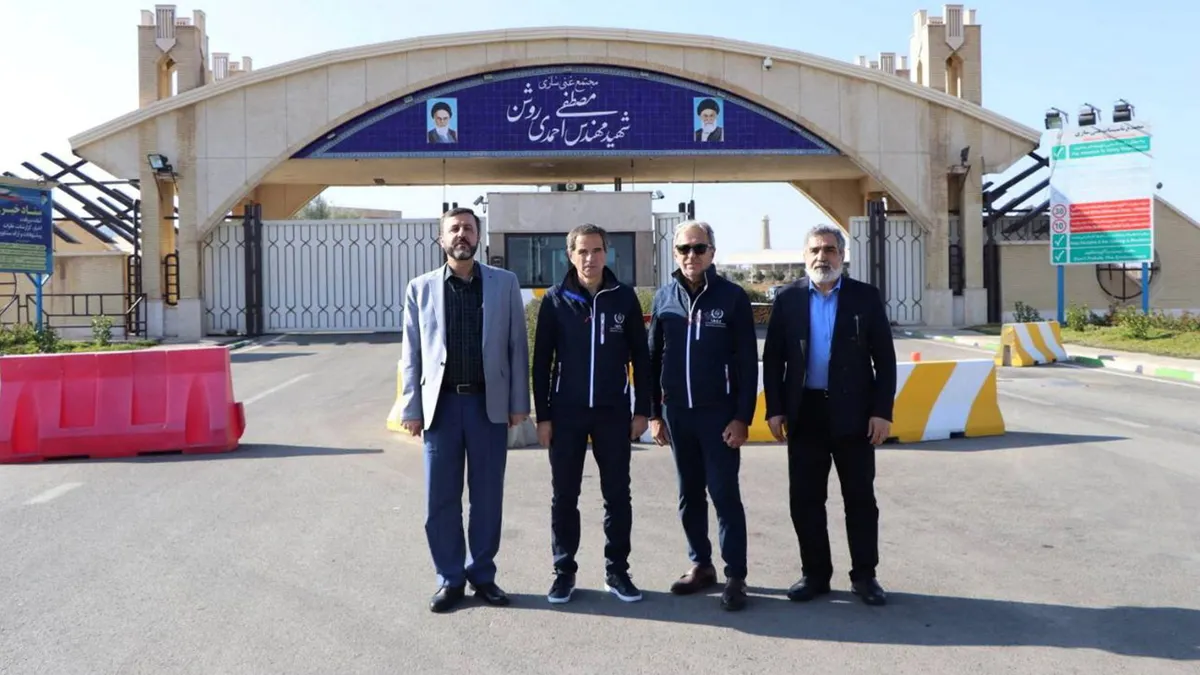
The International Atomic Energy Agency (IAEA) issued a warning on Saturday that nuclear facilities and their surrounding areas must be protected from any attacks, following a new incident near the Bushehr nuclear power plant in Iran. The agency reported that a missile fell in the vicinity of the plant, resulting in the death of one worker at the site.
In a statement published on social media, the agency confirmed that this is the fourth attack on Iranian nuclear facilities in recent weeks, raising concerns about the safety of these vital installations. Reports indicated that the explosion from the attack caused damage to one of the buildings on site, but no increase in radiation levels was recorded.
Details of the Incident
The Director General of the agency, Rafael Grossi, expressed deep concern over these incidents, emphasizing the necessity of not exposing any nuclear facility or its surrounding area to attacks. He confirmed that the supporting buildings at these sites may contain vital safety equipment, highlighting the importance of maintaining their integrity.
Grossi also called for all parties to exercise restraint in any military actions to avoid potential risks that could lead to nuclear incidents. These statements come at a sensitive time, as military tensions in the region are increasing, especially following repeated attacks on Iranian nuclear facilities.
Background & Context
Historically, Iran has witnessed numerous attacks on its nuclear facilities, particularly since the United States and Israel began conducting military operations against it. On February 28, joint American and Israeli forces launched a series of attacks targeting strategic sites in Iran, escalating tensions in the region.
The Bushehr nuclear power plant is one of Iran's most significant nuclear facilities, having been operational since 2011. This plant has sparked widespread controversy in the international community, with some countries viewing it as a threat to regional security due to concerns over its potential military applications.
Impact & Consequences
Repeated attacks on nuclear facilities could have dire consequences, not only for Iran but for the entire region. Such attacks could lead to radioactive leaks, threatening civilian lives and significantly impacting the environment. Moreover, military escalation could provoke reactions from Iran, increasing the likelihood of armed conflict in the area.
Furthermore, the continuation of these attacks could negatively affect international efforts to curb the proliferation of nuclear weapons. Nuclear security is a global issue that requires international cooperation, and any escalation in tensions could undermine these efforts.
Regional Significance
Given the current situation, the rising military tensions in Iran directly impact regional security in Arab countries. Many Arab nations are concerned about any escalation that could lead to a broader conflict in the region, which could adversely affect their economic and political stability.
There are also fears that any nuclear incident resulting from these attacks could affect neighboring countries, necessitating enhanced regional cooperation in nuclear security.
In conclusion, the current situation in the Arab region requires increased caution and cooperation among countries to ensure that conditions do not worsen and to maintain regional security and peace.