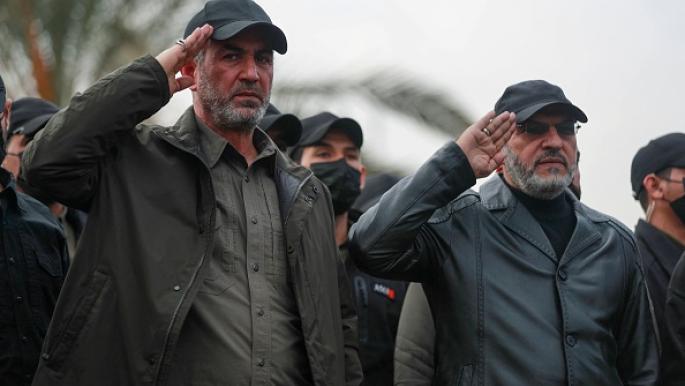
Abu Al-Walaa Al-Walaei is a significant leader of armed factions in Iraq, where his influence overlaps with the country's security and political dimensions. His role exemplifies a complex model amid regional tensions.
The importance of Al-Walaei is increasing under the current circumstances in Iraq, where competition among various armed factions is intensifying. Al-Walaei enjoys a vast network of relationships, enhancing his ability to influence political and security events.
Details of the Event
Abu Al-Walaa Al-Walaei is the leader of the "Nujaba" faction, which is considered one of the Iran-backed groups. Al-Walaei has demonstrated the ability to maneuver among different powers in Iraq, making him a key player in the political arena. In recent years, armed factions have undergone significant changes, playing an important role in determining the country's fate.
The security dimensions intertwine with the political, as Al-Walaei seeks to enhance his influence by presenting himself as a protector of national interests. At the same time, he faces significant challenges from the Iraqi government and other political forces, complicating the landscape further.
Background & Context
The Popular Mobilization Forces in Iraq were established following the emergence of the Islamic State (ISIS) in 2014, formed to counter security threats. Over time, these factions have become an integral part of the Iraqi political landscape. Abu Al-Walaa Al-Walaei, as one of the prominent leaders, represents a model of dual influence that combines military and political power.
Historically, Iraq has suffered from internal and external conflicts, contributing to the emergence of multiple armed factions. In this context, Al-Walaei is considered a symbol of adaptability to political and security changes, striving to achieve his goals through strategic alliances.
Impact & Consequences
The influence of Abu Al-Walaa Al-Walaei extends beyond Iraq, as he is part of a broader network of Iran-backed factions in the region. This influence can affect relations between Iraq and its neighbors, in addition to impacting regional stability.
Moreover, Al-Walaei's presence in the political scene reflects the challenges faced by the Iraqi government in controlling armed factions. These dynamics may lead to escalating tensions among different political forces, increasing instability in the country.
Regional Significance
The case of Abu Al-Walaa Al-Walaei serves as a model for many Arab countries facing similar challenges. Armed factions play a crucial role in shaping national policies, affecting regional stability. These dynamics may lead to changes in political alliances in the region.
Ultimately, Abu Al-Walaa Al-Walaei exemplifies how security and political dimensions intertwine in Iraq, necessitating greater international attention to understand the potential implications for regional stability.