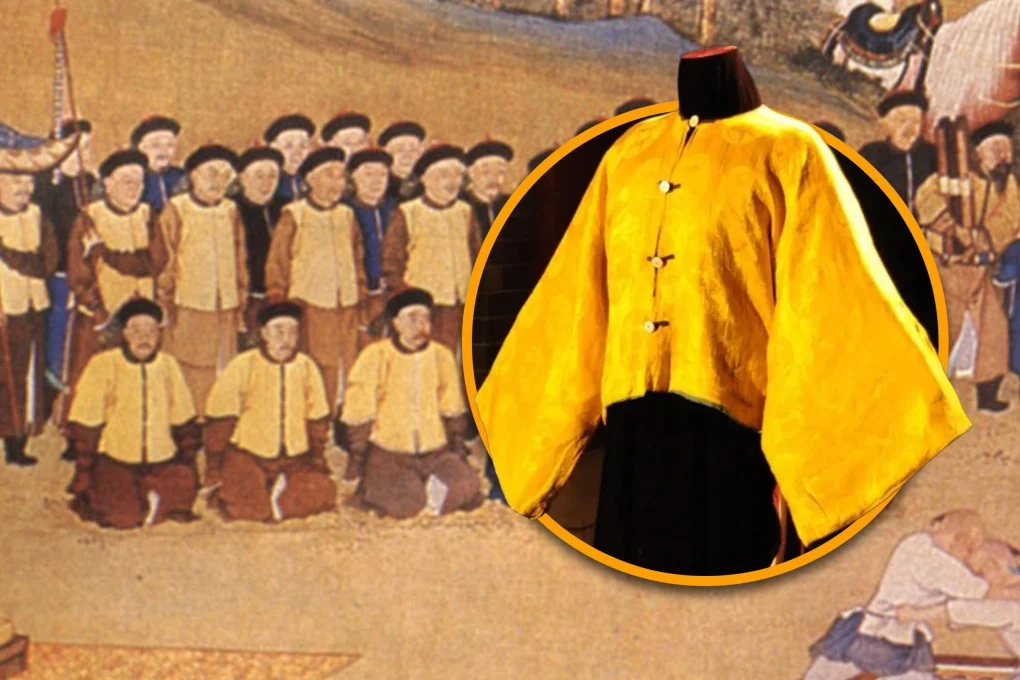
In ancient China, the yellow robe was regarded as a symbol of power and influence, with common people prohibited from wearing this color. Only the emperor, empress, and women of the imperial family were allowed to don the yellow robe, making it a distinctive mark of social status.
The imperial yellow robe, known as Huang Magua, was a type of garment worn by men of the Manchu ethnicity during the Qing Dynasty. It was worn over a long gown as a means of protection while riding horses, reflecting the importance of horsemanship during that era.
Details of the Yellow Robe
The yellow robe is distinguished by its unique color, which is considered a symbol of authority, used in formal ceremonies and significant events. Wearing this color was seen as a sign of strength and prestige, reflecting the deep cultural traditions in China.
During the Qing Dynasty, wearing yellow by anyone other than the emperor was considered a serious crime. These strict laws aimed to maintain royal prestige and reinforce imperial authority.
Background & Context
The Qing Dynasty was established in 1644 and lasted until 1912, regarded as the last imperial dynasty in China. Throughout this period, the country witnessed significant changes in politics and culture, with the imperial system being greatly reinforced.
The imperial yellow robe embodies a part of Chinese cultural heritage, reflecting national pride and ancient traditions. It was also used as a means of expressing power and influence within society.
Impact & Consequences
The yellow robe is considered a symbol of authority in Chinese culture and has influenced many aspects of social and political life. This robe illustrates how cultural symbols played a vital role in enhancing power and influence.
Moreover, these symbols continue to affect modern Chinese culture, where the color yellow is seen as a symbol of wealth and prosperity in various social occasions.
Regional Significance
Although the imperial yellow robe pertains to Chinese history, cultural symbols play a similar role in the Arab world. Just as there are symbols representing power and influence in Chinese culture, there are also similar symbols in Arab culture.
Studying cultural symbols across different civilizations can provide a deeper understanding of international relations and the shared history among peoples.
In conclusion, the imperial yellow robe is an integral part of Chinese cultural heritage, reflecting a long history of power and influence. Understanding these symbols can help foster mutual understanding between different cultures.