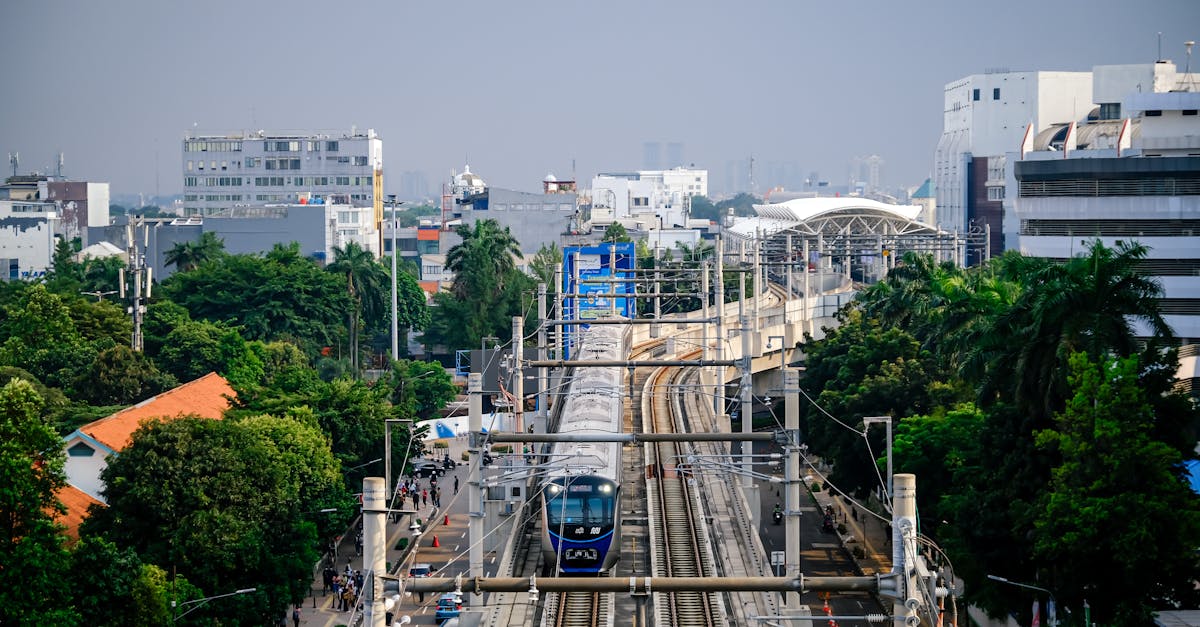
PT Kereta Api Indonesia (Persero), known as KAI, has expressed its intention to implement Automatic Train Protection (ATP) technology on its conventional railway network to enhance the safety and security of train journeys. This announcement was made during a meeting with the Indonesian Parliament's transportation committee, where the company's director general, Bobby Rasidin, emphasized that this technology will help reduce reliance on driver behavior and provide an additional layer of safety.
Currently, train drivers depend on monitoring signals on the tracks as the last line of defense. While automation systems have been implemented in modern trains such as the LRT, which automatically protects trains from collisions, Bobby explained that KAI aims to apply the ATP system to traditional trains, reflecting its commitment to improving safety standards.
Details of the Initiative
KAI's plans involve considering two types of ATP technologies. The first is the traditional system that relies on devices installed on the tracks and trains, requiring the installation of sensors on trains and receivers on the railways. However, Bobby noted that this system is costly and time-consuming to implement.
The second type of technology relies on new systems that utilize satellites and wireless communications, such as the FRMCS system, which could facilitate implementation and reduce costs. Bobby confirmed that KAI is significantly focused on improving safety and security at level crossings, as safety is one of the three core pillars of the company alongside operational performance and enhancing customer services.
Background & Context
The history of railways in Indonesia spans several decades, witnessing remarkable development in this sector. With the increasing number of passengers and the need to improve services, safety has become a top priority. According to statistics, there are approximately 3,674 level crossings, of which 1,810 are unprotected, increasing the risk of accidents.
As part of its efforts to enhance safety, KAI has closed 172 of these crossings and plans to install gates or safety devices at the remaining crossings. The company also aims to develop non-level routes, identifying around 40 locations that require the construction of bridges to separate train and vehicle traffic.
Impact & Consequences
The implementation of ATP technology could lead to a significant transformation in how railway safety is managed in Indonesia. This system is expected to considerably reduce accidents, thereby enhancing passenger confidence in railway services. Additionally, improved safety could contribute to an increase in passenger numbers, boosting revenue and stimulating economic growth.
Moreover, investing in new technologies such as FRMCS may position Indonesia at the forefront of countries adopting modern technology in transportation management, enhancing its standing in the regional and international market.
Regional Significance
Indonesia's experience in implementing safety technologies in railways serves as a model for Arab countries facing similar challenges in the transportation sector. Arab nations can benefit from these experiences to enhance their own railway systems, contributing to improved safety standards and reduced accidents.
In conclusion, the application of ATP technology represents an important step towards improving safety in Indonesian railways, reflecting KAI's commitment to providing safe and reliable services for passengers.