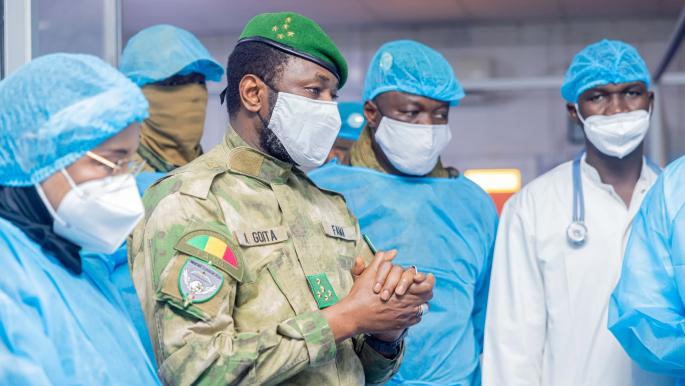
General Assimi Goita, the transitional leader of Mali, announced that authorities have regained control of the situation in the capital Bamako after the attacks that took place last Saturday. Goita confirmed that these attacks were part of a scheme to destabilize the country, noting that the government took immediate measures to contain the situation.
In the aftermath of the attacks, a curfew was imposed in Bamako as authorities seek to enhance security and protect citizens. Goita indicated that the security situation has been contained, and security forces are working to secure the city and ensure the safety of the population.
Details of the Incident
The attacks targeting Bamako occurred at a sensitive time for the country, which has been experiencing political and security instability for several years. These attacks resulted in injuries among civilians, heightening concerns about the security situation in the country.
Goita clarified that the government is investigating the circumstances surrounding these attacks and will take all necessary measures to hold those involved accountable. He also emphasized the importance of strengthening cooperation with international partners to address the security challenges facing the country.
Background & Context
Historically, Mali has faced several security and political crises, especially since the military coup in 2012 that led to the disintegration of the state and the emergence of armed movements. Since then, the transitional government has been striving to restore security and stability, but challenges remain.
Mali is considered a strategic center in the African Sahel region, where many neighboring countries face similar challenges. Therefore, any escalation in the security situation in Mali could impact regional stability as a whole.
Impact & Consequences
The repercussions of the attacks on Bamako could be widespread, potentially exacerbating security conditions and increasing tensions among various factions. Additionally, the imposition of a curfew may affect the daily lives of citizens and economic activities.
Moreover, these events could impact Mali's international relations, as pressures may increase on the government from the international community to provide security guarantees and achieve stability.
Regional Significance
The events in Mali raise concerns in the Arab region, where stability in the African Sahel is vital for regional security. Any escalation in security conditions could have repercussions for neighboring countries, necessitating coordination between Arab and African nations to address shared security challenges.
In conclusion, the situation in Mali remains under observation, with citizens hoping that the government can restore security and achieve stability in the country.