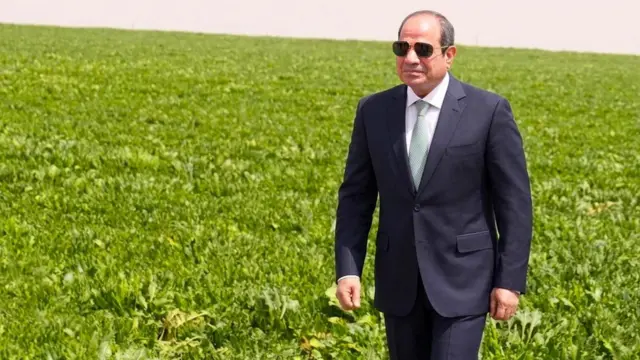
Egyptian President Abdel Fattah El-Sisi inaugurated the 'New Delta' project on Sunday, which is considered one of the largest agricultural expansion projects in Egypt. The project aims to add over two million acres to the agricultural land, reflecting the government's direction towards enhancing food security in the country. This initiative is part of the Egyptian government's efforts to attract private investments and strengthen the partnership between the public and private sectors.
The 'New Delta' project is part of Egypt's Vision 2030, which aims to achieve sustainable development. The project is expected to contribute to increasing agricultural production and providing new job opportunities, thereby boosting the local economy. However, the project faces numerous challenges that may affect its objectives.
Event Details
During the inauguration ceremony, El-Sisi emphasized the importance of the project in achieving agricultural self-sufficiency, noting that the government is striving to provide all necessary resources for its success. Plans were also announced to develop the infrastructure needed to support this agricultural expansion, including irrigation and drainage networks.
This project comes at a time when Egypt is facing challenges related to food security, as it heavily relies on imports to meet its food needs. The 'New Delta' is expected to help reduce these dependencies, but it requires significant efforts to ensure the sustainability of agricultural production.
Background & Context
Historically, Egypt has suffered from a shortage of arable land, making it dependent on importing many food crops. With the growing population, it has become essential to seek new solutions to enhance agricultural production. Agricultural expansion projects like the 'New Delta' represent an important step in this direction.
It is noteworthy that the Egyptian government has launched several agricultural projects in recent years, but many of them faced implementation difficulties. Therefore, the success of the 'New Delta' depends on the government's ability to overcome these challenges and provide the necessary support to farmers.
Impact & Consequences
If the 'New Delta' project succeeds in achieving its goals, it could lead to an improvement in Egypt's economic situation and increased food stability. However, challenges related to water resources and climate change may negatively impact the project's outcomes.
Moreover, the project could enhance cooperation between Egypt and other countries in the region, as agricultural expertise and technologies can be exchanged. It may also have a positive impact on trade relations between Egypt and neighboring countries.
Regional Significance
The 'New Delta' project serves as a model that other Arab countries facing similar food security challenges can benefit from. Egyptian experiences can contribute to developing effective agricultural strategies in countries like Iraq, Syria, and Libya.
In conclusion, the success of the 'New Delta' project hinges on the government's ability to address existing challenges and provide the necessary support to farmers. Achieving agricultural self-sufficiency in Egypt is an ambitious goal, but it requires continuous efforts and collaboration among all stakeholders involved.