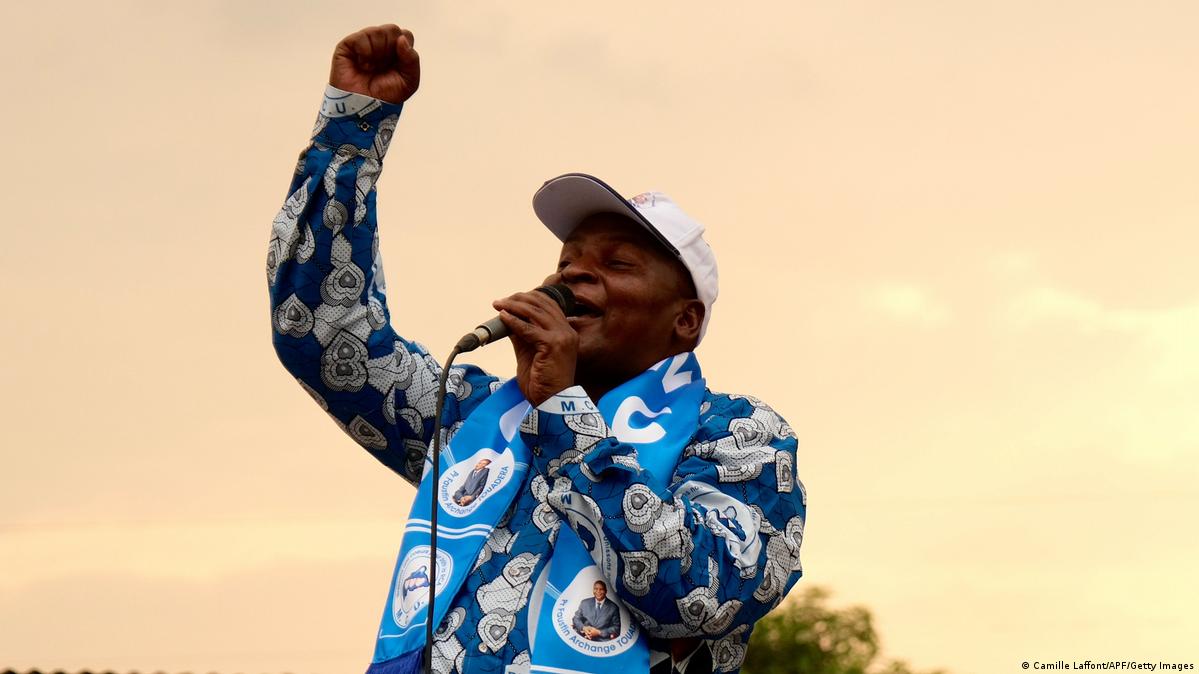
Félix Touadera was inaugurated yesterday in the capital, Bangui, marking the beginning of his third term as President of the Central African Republic. Touadera, who first took office in 2016 and was re-elected in 2020, received 77.9% of the votes in the election held on December 28, 2025.
Despite the results announced by the Constitutional Court, his main rival, Anicet-Georges Dologuélé, who garnered 13.5% of the votes, contested the results, alleging widespread fraud. However, the court rejected the appeal, further fueling the controversy surrounding the integrity of the elections.
Details of the Inauguration Ceremony
Touadera's new term comes amid a sensitive political context, with the opposition strongly criticizing the constitutional amendment in 2023 that allowed him to run again. This move has been viewed as an attempt to entrench autocratic rule, exacerbating political tensions in the country.
The inauguration ceremony was attended by several African leaders, reflecting the significance of the event on a regional level. The President of the Comoros, Azali Assoumani, arrived in Bangui, where he was officially welcomed by Touadera. Also present were Cameroonian Prime Minister Joseph Dion Ngute and Gabonese President Brice Clotaire Oligui Nguema.
Background & Context
Historically, the Central African Republic has suffered from political instability, experiencing multiple coups and armed conflicts since gaining independence from French colonial rule in 1960. Touadera assumed the presidency during a time when the country was deeply divided among armed groups, and he has since sought to promote stability through dialogue with various factions.
The constitutional amendment passed in 2023 came at a sensitive time, as the opposition argued that it aimed to enhance presidential powers at the expense of democratic institutions. This amendment has raised concerns about the decline of political freedoms and human rights in the country, complicating the political landscape further.
Impact & Consequences
Touadera's inauguration for a third term may exacerbate political tensions in the country, especially as the opposition continues to express dissatisfaction with the election results. These developments are likely to impact security stability in the Central African Republic, where armed groups still control large areas of territory.
Moreover, these events could affect relations with neighboring countries and the international community, as many nations seek to support stability in the region. It is crucial for neighboring countries to monitor developments in the Central African Republic, as political crises there can influence regional security.
Regional Significance
Although the Central African Republic is not part of the Arab world, its political events may impact stability in other regions. Political and economic conflicts in the Central African Republic could have repercussions on migration and displacement, potentially affecting neighboring Arab countries.
Furthermore, the strengthening of autocratic rule in the Central African Republic could serve as a model for some regimes in the region, raising concerns about the decline of democracy and human rights in Arab nations.
In conclusion, the future of the Central African Republic hangs in the balance between hopes for stability and political challenges, necessitating close monitoring of the situation by the international community.