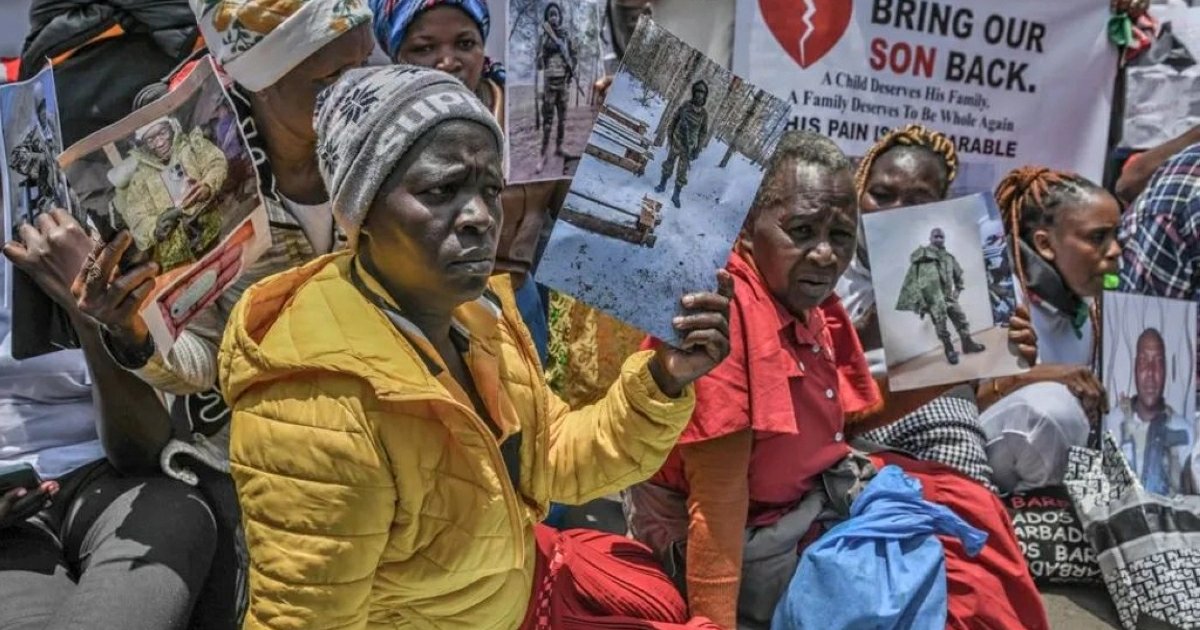
The Kenyan Foreign Minister Mosalia Mudavadi reported that the number of missing Kenyan citizens in Ukraine has risen to 16, following their enlistment in the Russian army to fight in the ongoing conflict there. While 47 others managed to return home, the fate of the missing remains unclear, raising significant concern in Kenya.
During a meeting of the Senate Foreign Affairs Committee, Mudavadi explained that 38 other Kenyans are receiving treatment in Russian hospitals, but access to them is limited. He also noted that there are 165 Kenyans currently participating in military operations, bringing the total number of participants in the conflict to over 250 Kenyans.
Details of the Incident
The minister clarified that the increasing number of missing individuals has risen from 10 to 16 within just 24 hours, reflecting the deteriorating situation of Kenyan citizens in Ukraine. He also mentioned that there are 2 Kenyans being held as prisoners of war in Ukraine.
Mudavadi confirmed that the recruits signed contracts to work as logistics officers or in combat roles, emphasizing that most Kenyans who joined the Russian army did so of their own free will and awareness. They were motivated by promises of attractive financial compensation ranging from $11,500 to $23,000 upon enlistment, in addition to a monthly salary of up to $2,700.
Background & Context
Kenya is currently conducting investigations into the illegal recruitment of its citizens to fight in Ukraine. Last February, Kenyan authorities shut down over 600 recruitment agencies suspected of deceiving citizens with promises of job opportunities abroad. In the same month, families of the missing Kenyans protested outside the parliament in Nairobi, demanding the government take action to return their loved ones.
In mid-March, Mudavadi met with his Russian counterpart Sergei Lavrov in Moscow, where they agreed to end the recruitment of Kenyans into the Russian army. Lavrov confirmed that Kenyan citizens, like those from other countries, voluntarily signed contracts with the Russian armed forces.
Impact & Consequences
Concerns are growing in Kenya regarding the safety of its citizens who have engaged in foreign conflict, reflecting the challenges the government faces in protecting its citizens from exploitation. The situation also highlights the need for stricter oversight of recruitment agencies that exploit the difficult economic conditions faced by many Kenyans.
Ukrainian intelligence estimates indicate that over 1,700 individuals from 36 African countries have been recruited to fight for Russia, reflecting the widening scope of the conflict and its impact on other nations. Ukraine, in turn, is also seeking to recruit fighters from around the world, complicating the situation further.
Regional Significance
These events are particularly significant for the Arab region, as they highlight the challenges associated with recruiting youth into armed conflicts. The situation in Ukraine may raise concerns among Arab countries regarding the safety of their citizens abroad, especially amid the difficult economic conditions faced by some nations.
In conclusion, the issue of missing Kenyans in Ukraine underscores the urgent need for action to protect citizens from exploitation and reflects the challenges governments face in dealing with illegal recruitment in armed conflicts.