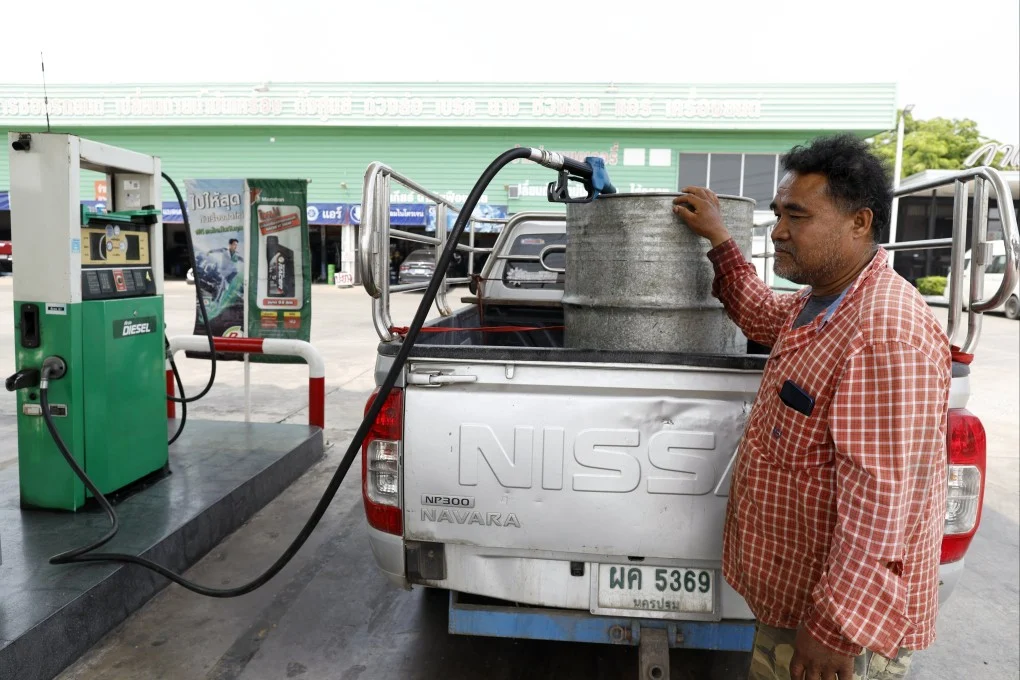
Thailand is facing a severe oil supply crisis, with Prime Minister Anutin Charnvirakul warning that the situation may worsen in the coming days. This warning comes as diesel prices have reached a record high, exceeding 50 baht (approximately $1.54) per liter.
In light of this situation, Justice Minister Major General Ruttaporn Narawat confirmed the existence of illegal oil smuggling and storage, leading to a significant supply shortage. He stated that "oil has already disappeared," indicating that the government is working to address this issue.
Details of the Crisis
Reports indicate that oil smuggling is occurring via sea routes, where smugglers transport large quantities of oil away from the authorities' watchful eyes. Additionally, there are illegal storage operations in secret locations, complicating the government's efforts to control the market.
This situation arises at a time when Thailand heavily relies on fuel imports, making it vulnerable to global price fluctuations. The crisis has significantly impacted citizens' lives, as transportation costs and prices of essential goods have surged.
Background & Context
Historically, Thailand has experienced similar oil supply crises, but this one is among the most severe. The Thai economy is heavily dependent on imported fuel, rendering it susceptible to global market fluctuations.
In recent years, global oil prices have increased due to several factors, including geopolitical tensions and rising energy demand. This situation has directly affected countries reliant on imports, such as Thailand.
Impact & Consequences
The government anticipates that this crisis will lead to rising prices, which will affect the economy overall. An increase in fuel costs may result in greater inflation, putting additional pressure on Thai households.
Furthermore, the continuation of smuggling operations could exacerbate the situation, as the government may face increased pressure to control the market and prevent these illegal activities. The situation requires a swift and effective response from the government to ensure supply stability.
Regional Significance
The oil crisis in Thailand serves as an indicator of the challenges faced by fuel-importing countries, highlighting the need for international attention. The implications of rising oil prices and smuggling extend beyond Thailand, affecting regional stability and economic conditions.
In conclusion, the Thai government must act decisively to tackle the ongoing oil supply crisis to safeguard the economy and the well-being of its citizens.