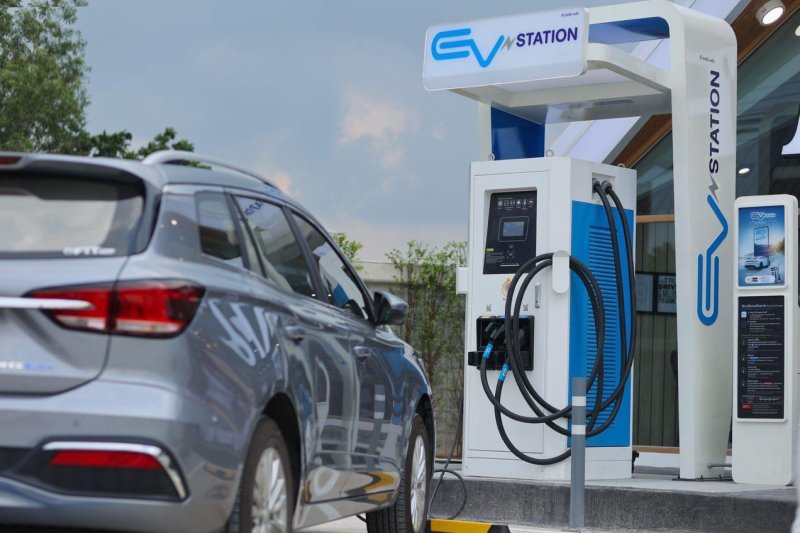
PTT Oil and Retail Business Plc (OR) has announced its plans to expand electric vehicle (EV) services through a substantial investment in this sector, amid rising concerns among drivers due to global oil price fluctuations. The company's CEO, ML Peekthong Thongyai, stated that the shift towards electric vehicles may increase, but it is difficult to determine how many people will transition to these cars at this time due to the instability of oil prices.
This move comes at a time when Thailand is suffering from the repercussions of the Israeli-American war on Iran, which has led to rising prices for crude and refined oil. With the depletion of the fuel fund that acts as a buffer against fuel price fluctuations, the government has been forced to raise local fuel prices, with diesel prices reaching 40.74 Thai Baht per liter on March 31, up from 38.94 Baht.
Investment Details and Future Plans
OR aims to invest approximately 58 billion Thai Baht to enhance its operations between 2026 and 2030, with 38 billion Baht of this amount allocated for oil and electric vehicle operations. ML Peekthong confirmed that the company is focusing on developing infrastructure, oil transportation, and electric vehicle charging services.
OR expects the number of drivers using its charging services to rise to 7,000 drivers by 2030, with an average charging time of seven hours daily, compared to 3,000 users with six hours of charging daily in 2025. In 2023, the number was 1,600 users with four hours of charging daily.
Background & Context
This initiative is part of a global shift towards clean energy, with increasing pressure on governments and companies to reduce carbon emissions. In recent years, many countries, including Thailand, have seen a rise in demand for electric vehicles as a more sustainable alternative to traditional fossil fuel-powered cars.
Historically, oil prices have always been volatile, impacting the economies of countries that heavily rely on fuel. With growing environmental awareness, many companies have begun investing in renewable energy and clean technology.
Impact & Consequences
This investment in electric vehicles represents a strategic move for OR, reflecting the global trend towards reducing reliance on fossil fuels. This initiative is expected to increase the number of electric vehicles on the roads, contributing to lower carbon emissions and improved air quality in urban areas.
Moreover, rising fuel prices may push more drivers to consider purchasing electric vehicles, thereby enhancing the demand for the infrastructure needed to charge these cars. Consequently, this shift could have a positive impact on the local economy by creating new job opportunities in the renewable energy sector.
Regional Significance
Arab countries are among the largest oil producers in the world, which poses significant challenges amid the global transition towards clean energy. However, investing in electric vehicles and the necessary infrastructure could represent an opportunity for Arab nations to diversify their economies and reduce dependence on oil.
Successful experiences in Thailand could provide models for Arab countries, where these nations could begin developing similar strategies to promote the use of clean energy.