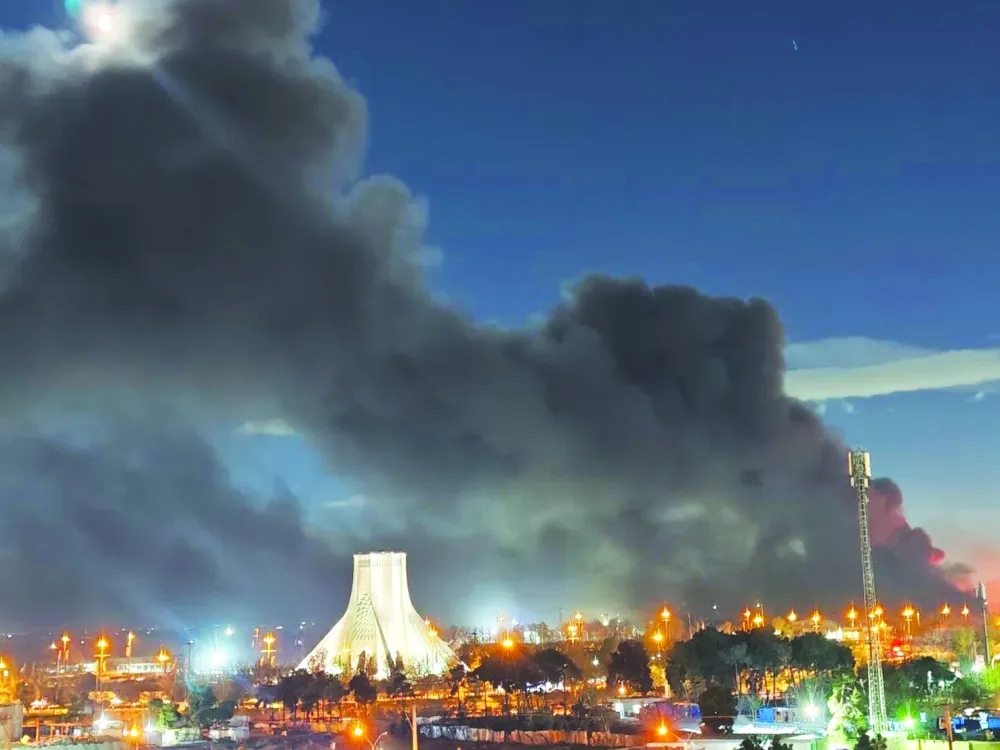
Pressure on Iran is intensifying as the deadline set by President Donald Trump nears. Recent days have seen significant military escalation amid diplomatic efforts to halt the conflict. Reports have confirmed that Israel targeted military facilities in Tehran, further heightening tensions in the region.
During a press conference at the White House, Trump emphasized that the deadline, which expires tonight, represents a "final deadline," highlighting the importance of reopening the Strait of Hormuz as part of any agreement with Iran. He also expressed his rejection of Iran imposing fees on ships passing through the strait, suggesting instead that the United States could impose fees.
Details of the Incident
In a related context, reports indicated that Israeli strikes targeted airports and military facilities in Tehran, including Mehrabad Airport. Industrial sites in Asaluyeh port were also hit, where Israel claimed it targeted infrastructure linked to missile production.
On the other hand, Reuters reported from informed sources that Pakistan's plan to halt the war, proposing an immediate ceasefire, did not receive approval from Trump. In contrast, the Iranian news agency IRNA stated that Tehran presented a response consisting of ten points, rejecting a temporary ceasefire.
Background & Context
The Middle East is witnessing intense regional movements aimed at de-escalation, amid mutual threats between the United States and Iran. Several countries, including Egypt, Turkey, and Pakistan, have expressed their willingness to mediate in talks to avoid further escalation.
These countries are seeking to achieve a partial ceasefire agreement lasting 45 days, as part of diplomatic efforts aimed at making progress in negotiations. However, according to experts, the lack of strategic consensus among the parties involved makes these efforts more about crisis management than resolution.
Impact & Consequences
Fears are growing that military escalation could lead to greater conflict in the region, potentially affecting the stability of neighboring countries. The mutual threats between the United States and Iran may complicate mediation efforts and exacerbate regional tensions.
In this context, former Egyptian ambassador Mohamed Higazy confirmed that the mediation led by Egypt, Turkey, and Pakistan reflects a sensitive regional moment, where deterrent calculations intersect with de-escalation pressures. He noted that the success of this mediation depends on providing convincing security and political guarantees to both parties.
Regional Significance
These developments directly impact Arab countries, as fears of escalating conflict and its effects on regional security increase. Egypt, through President Abdel Fattah el-Sisi's statements, has condemned the aggression against Arab nations, emphasizing the need for international efforts to achieve peace.
In conclusion, the region appears to be at a crossroads, with pressure mounting on Iran while international and regional parties seek diplomatic solutions to avoid further escalation. However, the question remains whether these efforts will yield tangible results amid the current tensions.