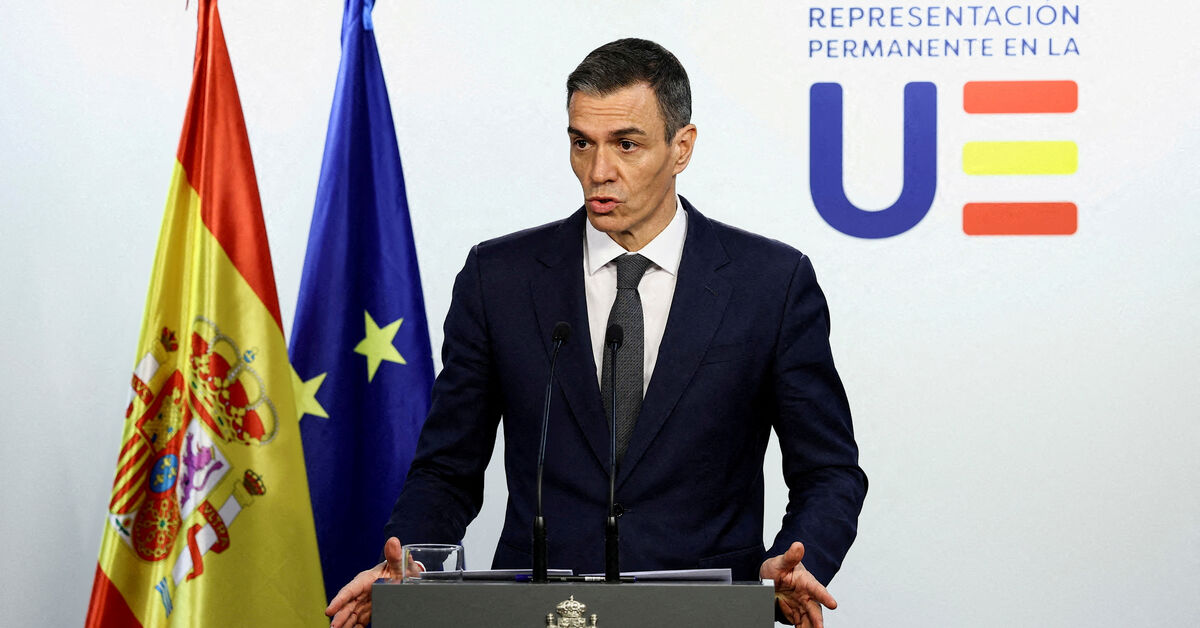
Recent opinion polls published on Monday reveal that the ruling Socialist Party in Spain has achieved a significant increase in voter support, thanks to Prime Minister Pedro Sánchez's rejection of the U.S.-Israeli war on Iran. The survey shows that voters prefer the Socialist Party at the expense of the far-right Vox party, which has seen a decline in its popularity.
Sánchez, regarded as one of the prominent Western leaders criticizing this war, described it as an "illegal and irresponsible war." He has taken practical steps to express his opposition, including closing Spanish airspace to U.S. planes involved in the attacks and preventing them from using joint military bases in southern Spain.
Details of the Event
These developments come at a sensitive time for Spain, as Sánchez seeks to bolster his position in the domestic political arena. Polls indicate that support for the Socialist Party has risen significantly, reflecting public backing for his stance on the war. Conversely, Vox, which had gained traction in previous elections, is experiencing a downturn, suggesting a shift in the general mood of voters.
It is noteworthy that the war on Iran has sparked widespread controversy in political and public circles, with many believing that military intervention could exacerbate conditions in the region. Polls have shown that many Spaniards oppose any form of military intervention in foreign conflicts.
Background & Context
Historically, Spain has suffered from the repercussions of foreign wars, having experienced negative fallout from military interventions in the past. These experiences have fostered a public consciousness that rejects wars, explaining Sánchez's current position. Additionally, as a member state of the European Union, Spain faces increasing pressure from its allies to engage in international security issues.
In recent years, Spain has witnessed a rise in far-right parties, such as Vox, which exploit national issues to enhance their popularity. However, the current government stance may reflect a shift in political trends, as voters seem to prefer stability and peace over military confrontations.
Impact & Consequences
These developments could significantly influence the Spanish political landscape, potentially strengthening Sánchez's position in upcoming elections. The decline of Vox may also open the door for other parties to expand their popular base. It is also crucial to monitor international reactions to Spain's stance, particularly from the United States and its allies.
Moreover, these events may affect Spain's relations with Arab countries, as Spain's position on the war in Iran indicates future political trends. This could contribute to improving Spain's image in the Arab world, where the rejection of wars is viewed as a positive step towards promoting peace and stability in the region.
Regional Significance
European positions on conflicts in the Middle East are of great importance to the Arab world. With rising tensions in the region, Spain's stance may have positive implications for relations between Arab countries and Europe. Additionally, the rejection of military interventions could bolster peace efforts in the region, paving the way for constructive dialogue among various parties.
In conclusion, Spain's current position reflects a growing public awareness of the importance of peace and stability, which may impact the political landscape in the country and its relations with the Arab world.