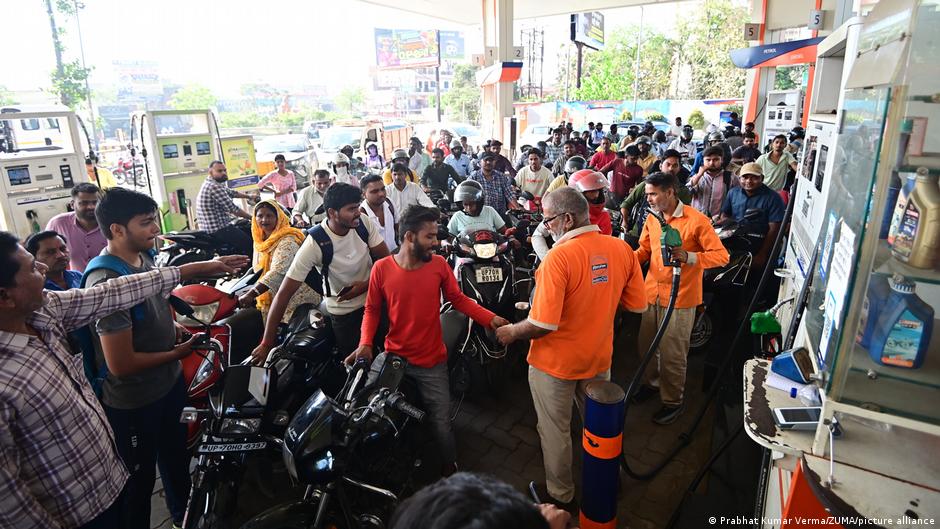
The Indian government has announced a reduction in special taxes on gasoline and diesel, aiming to ease the economic burdens on citizens. This move comes amid a significant rise in global oil prices due to the ongoing conflict in Iran, which has greatly affected the stability of global oil markets.
In detail, the tax on gasoline has been reduced from 13 rupees to 3 rupees per liter, while the tax on diesel has been completely eliminated, down from 10 rupees per liter. This decision comes at a time when India is suffering from the effects of the conflict in the Gulf region, as it is the third-largest oil importer in the world and heavily relies on supplies that pass through the Strait of Hormuz.
Details of the Decision
India has been significantly affected by disruptions in global oil markets, with liquefied natural gas (LPG) prices witnessing a notable increase, impacting families and businesses alike. Reports indicate that the Indian government made this decision to protect citizens from the sharp rise in global oil prices, with Indian Oil Minister Hardeep Singh Puri stating that the government chose to bear the financial burden rather than increase prices for citizens.
It is noteworthy that India is among the friendly nations allowed by Iran to transit through the Strait of Hormuz, with 20 Indian vessels carrying approximately 540 Indian sailors in the conflict-affected area. Shipping movements have resumed after a period of halt due to military tensions.
Background & Context
Historically, India has heavily relied on imported oil to meet its energy needs, with the dependence on supplies passing through the Strait of Hormuz estimated at about 40% of its requirements. The current conflict in Iran has led to significant supply disruptions, prompting the Indian government to take swift action to address the situation.
In recent years, India has witnessed repeated increases in fuel prices, affecting the cost of living. These increases have sometimes led to public protests, prompting the government to take steps to alleviate the burdens on citizens.
Impact & Consequences
This step is seen as an attempt by the Indian government to protect citizens from the repercussions of global oil price increases. However, experts point out that the tax reduction may not directly translate into lower fuel prices at gas stations, as oil marketing companies may absorb these reductions.
The question remains: Will these reductions lead to a real decrease in fuel prices? Reports indicate that prices at gas stations have not changed significantly following the announcement of the reductions, raising questions about the effectiveness of these measures.
Regional Significance
Arab countries are directly affected by conflicts in the Gulf region, where oil prices are a critical factor in their economies. Any disruption in oil supplies can lead to price increases in global markets, impacting oil-importing countries, including Arab nations.
The conflict in Iran also highlights the importance of regional stability in ensuring the flow of oil and gas, which is vital for Arab economies. Therefore, any steps taken by India or any other country in the region could have far-reaching effects on Arab markets.