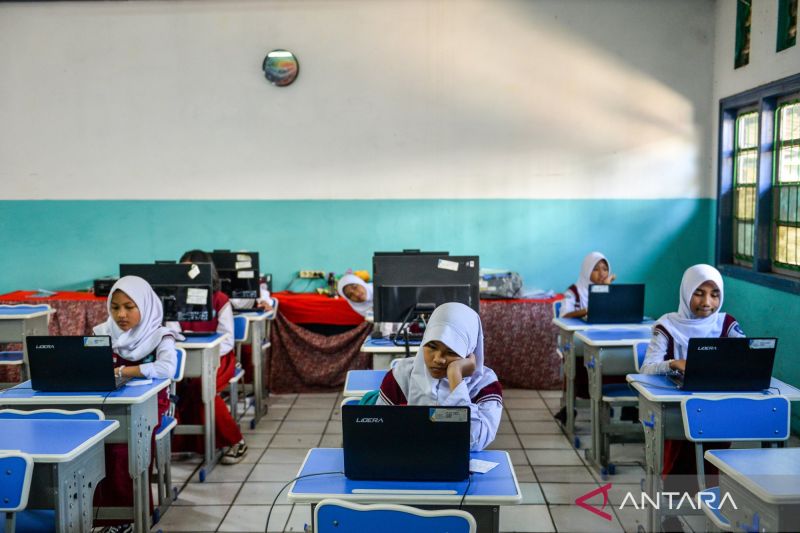
The Indonesian Ministry of Basic and Secondary Education (Kemendikdasmen) has announced its readiness to conduct the academic ability test scheduled for next April. The ministry confirmed that the expected participation rate in this test will reach 98%, reflecting students' commitment to education and their appreciation for the importance of this type of assessment.
The academic ability test aims to measure students' academic achievement across various subjects and is considered an essential part of Indonesia's education system. This test comes at a time when the education sector in the country is undergoing significant transformations, as the government seeks to improve the quality of education and develop curricula to meet market needs.
Event Details
The test is scheduled to be organized nationwide, with schools preparing students for the assessment. The test will include a range of core subjects such as mathematics, Indonesian language, and science. The ministry will also provide technical and logistical support to schools to ensure a smooth process.
This initiative is part of the Indonesian government's efforts to enhance education and develop students' skills, as the ministry aims to achieve positive outcomes through this test. A comprehensive plan has been prepared to ensure all students participate in this important event.
Background & Context
Historically, Indonesia's education system has faced significant challenges, ranging from a lack of educational resources to insufficient teacher training. However, the government has worked to improve these conditions through educational development programs and curriculum updates. Studies have shown that improving education quality can significantly contribute to the country's economic and social development.
In recent years, numerous reforms have been introduced in the education system, including a focus on digital education and the provision of online educational resources. These changes aim to meet the needs of a new generation of students living in a technology-driven era.
Impact & Consequences
The academic ability test can have a significant impact on students' futures, as it will help identify their strengths and weaknesses in academic achievement. This test will also enable the government to assess the effectiveness of educational programs and identify areas that need improvement.
Moreover, the success of this test could enhance community confidence in the education system, potentially leading to increased investments in this sector. Education is one of the key factors contributing to sustainable development, and thus improving it can benefit society as a whole.
Regional Significance
Indonesia's experience in conducting academic ability tests serves as a model that can be beneficial for Arab countries. Many Arab nations face similar challenges in their education systems, such as poor education quality and resource shortages. This experience could inspire Arab countries to develop their educational systems and improve student outcomes.
In conclusion, the academic ability test in Indonesia represents an important step towards improving education and reflects the government's commitment to developing students' skills. It is crucial for other countries to learn from this experience to achieve similar improvements in their educational systems.