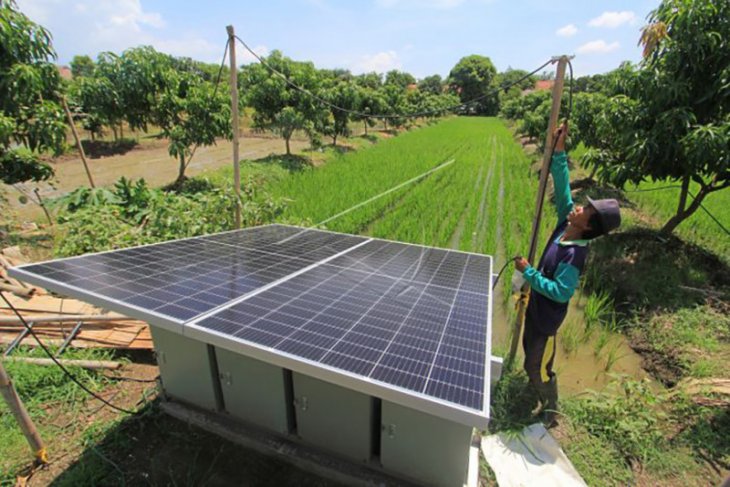
The Indonesian Ministry of Economic Coordination has declared that transitioning to clean energy is a fundamental part of its strategy for economic growth and addressing climate change. This statement was made by Farah Heliantina, Assistant to the Deputy Minister of Economic Coordination, during a press conference in Jakarta on Tuesday.
Heliantina pointed out that the transition to clean energy is not merely a government agenda, but an integral part of the national economic strategy. She noted that this transition comes at a time when the world is experiencing significant fluctuations in energy prices, due to geopolitical tensions, particularly between Iran, the United States, and Israel.
Event Details
Heliantina emphasized that Indonesia needs to enhance its energy security by diversifying its sources and not relying solely on fossil fuels. She explained that the transition to clean energy should drive economic growth, creating new opportunities in industries and green jobs.
She also confirmed that Indonesia possesses substantial renewable energy resources, providing a strong opportunity to achieve its green manufacturing goals. The government aims to establish solar power plants with a capacity of up to 100 gigawatts in a short timeframe, as part of its strategy to achieve 100% electricity from renewable sources within the next decade.
Background & Context
Historically, Indonesia has heavily relied on coal and oil as primary energy sources. With the increasing global awareness of climate change and its environmental impact, many countries, including Indonesia, have begun to reassess their energy strategies. Studies have shown that transitioning to clean energy can help reduce carbon emissions and improve air quality.
In recent years, Indonesia has seen an increase in investments in renewable energy projects, reflecting the government's commitment to enhancing environmental sustainability. Additionally, government financial support for the renewable energy sector indicates a desire to achieve energy independence and strengthen the national economy.
Impact & Consequences
Indonesia's plan for transitioning to clean energy is a strategic step that reflects the global shift towards sustainability. This plan is expected to create new job opportunities in renewable energy sectors, enhancing the country's ability to tackle economic challenges.
Moreover, transitioning to clean energy could help Indonesia reduce its dependence on energy imports, strengthening its capacity to cope with fluctuations in global energy prices. This move may also improve international relations by fostering cooperation in renewable energy sectors.
Regional Significance
Given the environmental and economic challenges faced by Arab countries, Indonesia's experience in transitioning to clean energy could serve as a model. Many Arab nations possess significant renewable energy resources, such as solar and wind energy, providing them with an opportunity to achieve sustainable development.
Arab countries can benefit from Indonesia's successful experiences in boosting investments in renewable energy, contributing to the achievement of sustainable development goals and enhancing energy security in the region.