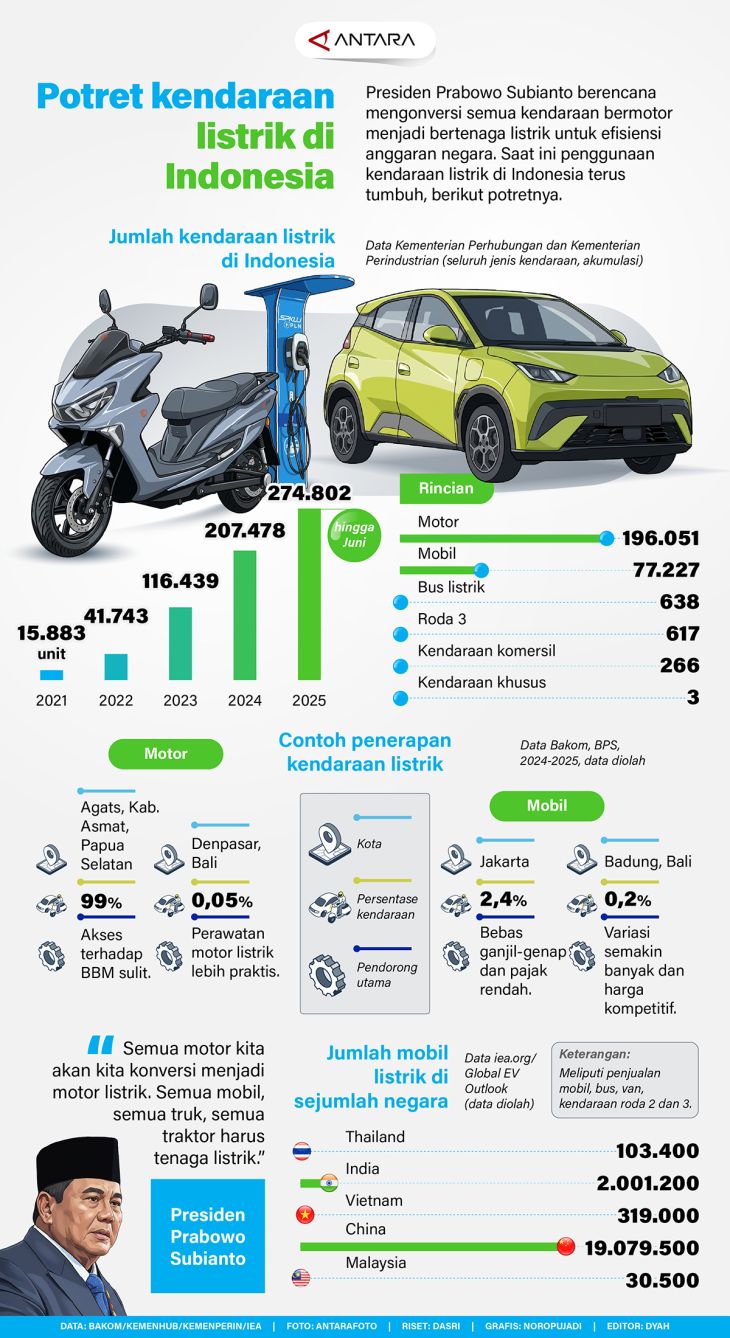
Indonesian President Joko Widodo has revealed an ambitious plan aimed at converting all petroleum vehicles to electric vehicles, as part of the government's efforts to enhance the efficiency of the national budget. This initiative comes at a time when the transportation sector in Indonesia is shifting towards the use of clean energy, reflecting the global trend towards sustainability.
The Indonesian government seeks to reduce dependence on fossil fuels, which are considered one of the main sources of environmental pollution. It also aims to improve air quality in major cities, where Indonesia suffers from high pollution levels due to emissions from traditional vehicles.
Details of the Initiative
President Widodo's plan includes significant investments in electric vehicle charging infrastructure, along with providing incentives for citizens to encourage them to use these vehicles. These incentives are expected to include tax reductions and financial support for manufacturers and investors in this sector.
The government will also work on developing a network of charging stations across the country, making it easier for citizens to use electric vehicles on a daily basis. The president noted that this step will contribute to creating new job opportunities in the renewable energy sector.
Background & Context
Historically, Indonesia has seen an increase in the use of electric vehicles, with studies showing a growing interest among citizens in transitioning to environmentally friendly transportation. Previous governments have contributed to promoting this trend by providing awareness programs about the benefits of electric vehicles.
Indonesia is one of the largest car markets in Southeast Asia, and with the increasing environmental awareness, the shift to electric vehicles represents a significant opportunity for economic growth. Additionally, Indonesia aims to achieve the sustainable development goals set by the United Nations, making this step critically important.
Impact & Consequences
This transition is expected to have a significant impact on the Indonesian economy, as it will help reduce energy costs in the long term. The shift to electric vehicles will also assist in decreasing reliance on oil imports, thereby enhancing the country's economic independence.
Moreover, this transition may encourage other countries in the region to adopt a similar approach, potentially leading to improved air quality and reduced carbon emissions across Southeast Asia.
Regional Significance
Indonesia's experience in transitioning to electric vehicles serves as a model for Arab countries, which face similar challenges in environmental pollution and reliance on fossil fuels. Arab nations can benefit from this experience by developing similar strategies to promote the use of clean energy.
Furthermore, cooperation between Arab countries and Indonesia in the field of green technology could open new avenues for investment and sustainable development in the region.
In conclusion, Indonesia's plan to convert all vehicles to electric represents a bold step towards a more sustainable future. By promoting the use of clean energy, the Indonesian government hopes to achieve significant economic and environmental benefits, making it a model for the region and the world.